

Why early warning signs matter
A garage door works as a balanced system. Springs carry the weight, cables and drums turn that into lift, rollers keep the door in its tracks, and the opener guides the whole thing. When one part wears, the others take up the slack, and the strain comes out as noise, shaking or hesitation long before anything breaks.
Letting those hints slide usually costs more parts in the end. A worn roller left alone can bend a track. A spring losing strength makes the opener strain until its gear strips. A fraying cable can snap and drop one side of the door. Each early repair is smaller than the failure it heads off.
Treat the lists below the way you would the warning lights on a car’s dashboard. Some signs mean book a visit soon; a few mean stop using the door until it has been looked at.
Sounds that point to wear
Your ears usually notice trouble before your eyes do. Run the door once while you stand inside and listen.
- Grinding or scraping. Usually rollers dragging in a track, or a track that is bent or out of line.
- Squealing or squeaking. Dry hinges, rollers or bearings. Lubricant often quiets it, but a squeal that keeps returning points to a worn part.
- Popping or banging during travel. A roller jumping in the track, a hinge cracking, or a spring binding as it winds.
- A single loud bang with the door at rest. Almost always a spring breaking. Stop using the door.
- The opener straining, humming or clicking. The door may be heavier than it should be, or the opener’s gear is wearing.
Warning signs you can see
- Jerky or shaky travel. The door hesitates or shudders at the same spot every time.
- Uneven at the bottom. One side meets the floor before the other, or a wedge of light shows at one end. Often a cable or spring problem.
- A door that drifts. In a balance check, done as our garage door care checklist describes, a door that slides down or creeps up has springs out of balance.
- A split in a spring. If the coil over the door has separated into two pieces, it is broken, even if the door still moves a little.
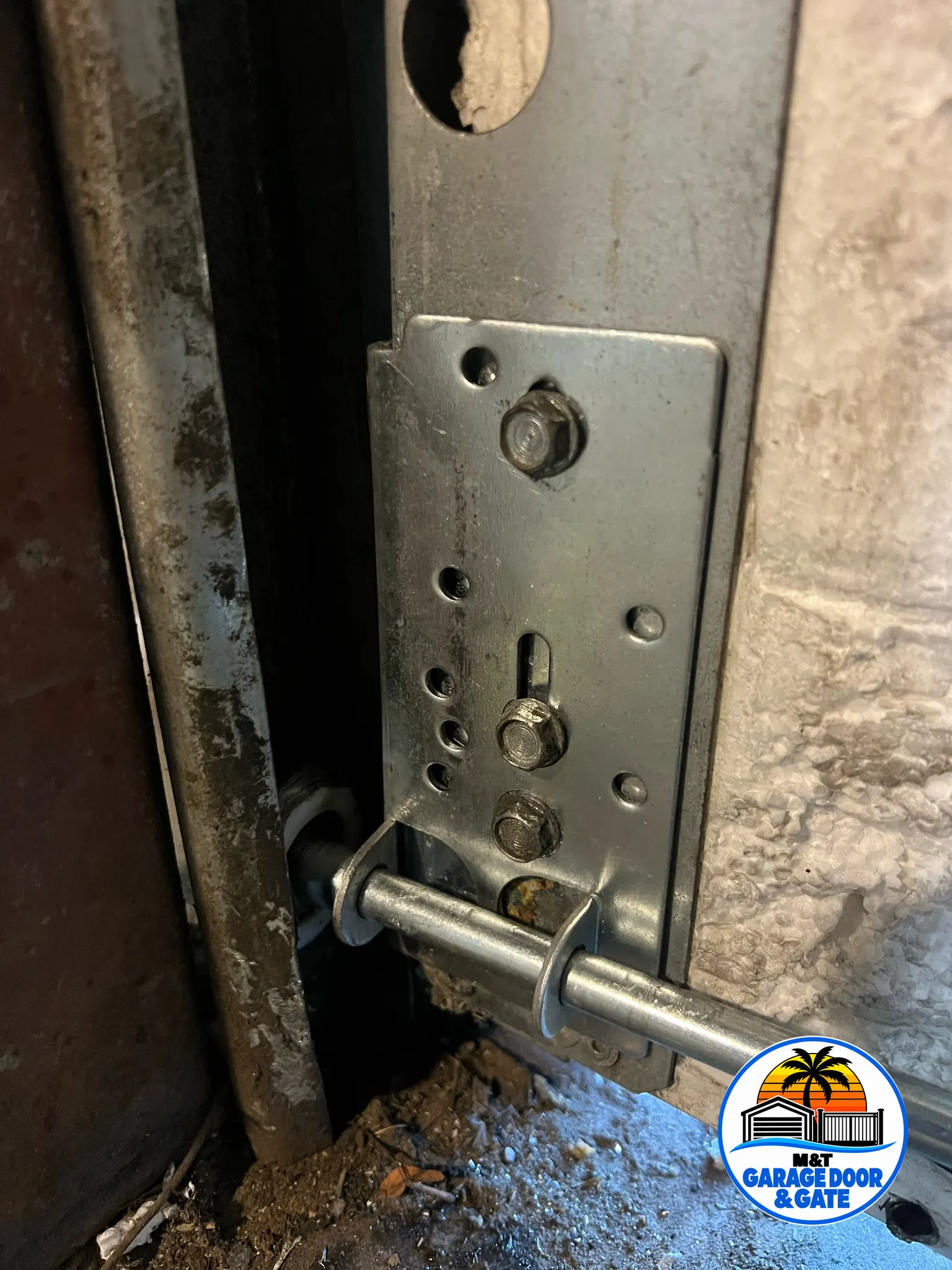
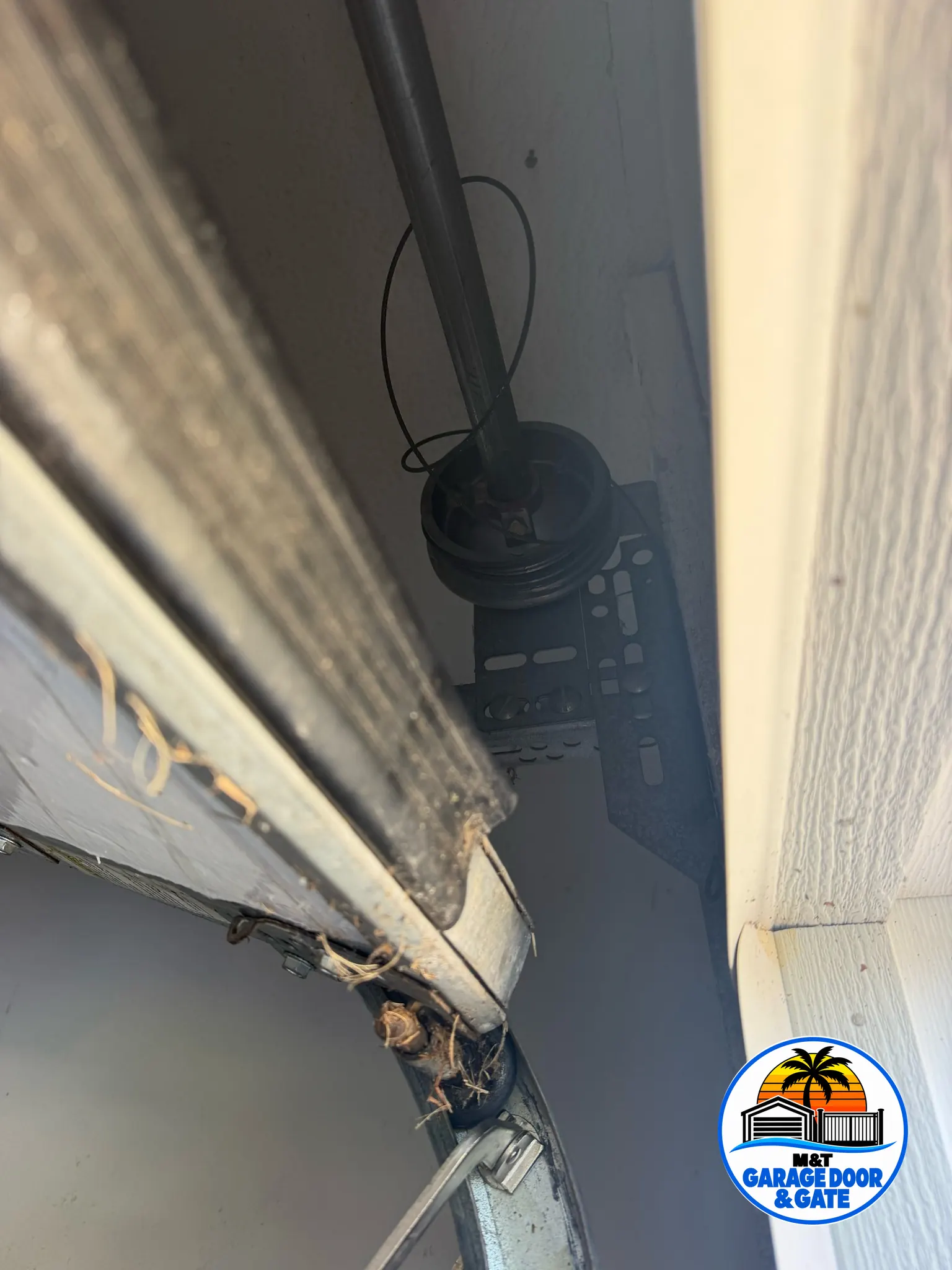
- Frayed or slack cables. Broken strands near the bottom corners, or a cable that hangs loose.
- Wobbly or cracked rollers. Rollers should sit straight in the track and turn freely.
- Daylight or water under the door. A worn bottom seal, or a door that no longer sits level.
- Reversing for no clear reason. Sensors, force settings, or a door that is getting heavier.
Which signs mean stop using the door
Stop running the door, and keep everyone out of the doorway, if you heard a loud bang, see a gap in a spring, or find a cable frayed or off its drum. The same goes for a door that hangs crooked or has left its track. In each case the door’s weight is no longer carried the way it should be, and the next run of the opener can bring it down.
If the door is closed, leave it closed. If it is open and stuck, do not try to force it down. Phone (813) 836-7187 and describe what you see; the broken spring guide explains what to expect if a spring is the cause.
While you wait, unplug the opener so nobody presses a remote out of habit. A sticky note on the wall button helps too.
Signs that can wait for a scheduled visit
Noise, mild shaking, a sluggish opener, a worn bottom seal, remotes with short range and surface rust on the hardware all deserve attention soon, though not this minute. Note when the problem happens and what it sounds like, and take a short phone video of the door running if you can. Then set up a visit online.
In the Tampa Bay climate, heat and humidity speed up most of this wear, and near the water salt air adds rust on top. A yearly garage door maintenance visit catches most of these before you notice them. For the full range of repairs, from springs and cables to openers and tracks, see our page on garage door repair in Tampa and the service pages linked from it.