

Start with a repair check
Openers fail in a handful of predictable ways, and most of them can be repaired. Think of a worn drive gear, a logic board hit by a surge, or safety sensors knocked out of line. A broken trolley, travel limits that drifted, or remotes that lost their pairing can also make a sound unit look finished. Garage door opener repair covers every one of these.
Some openers have earned their retirement. A unit old enough to lack safety sensors at the floor, one whose parts are no longer made, or one with a cracked housing or a burned-out motor is a candidate for a plug-in unit. So is an opener that has spent years fighting a heavy, unbalanced door, though in that case the door gets fixed first.
The door matters more than the opener. A balanced door, with springs sized to its weight, is light enough to lift by hand, and the opener only guides it. Put a strong opener on an unbalanced door and it wears out early; fix the springs and even a modest opener can run for years.
Chain, belt, screw or wall-mount: choosing an opener drive
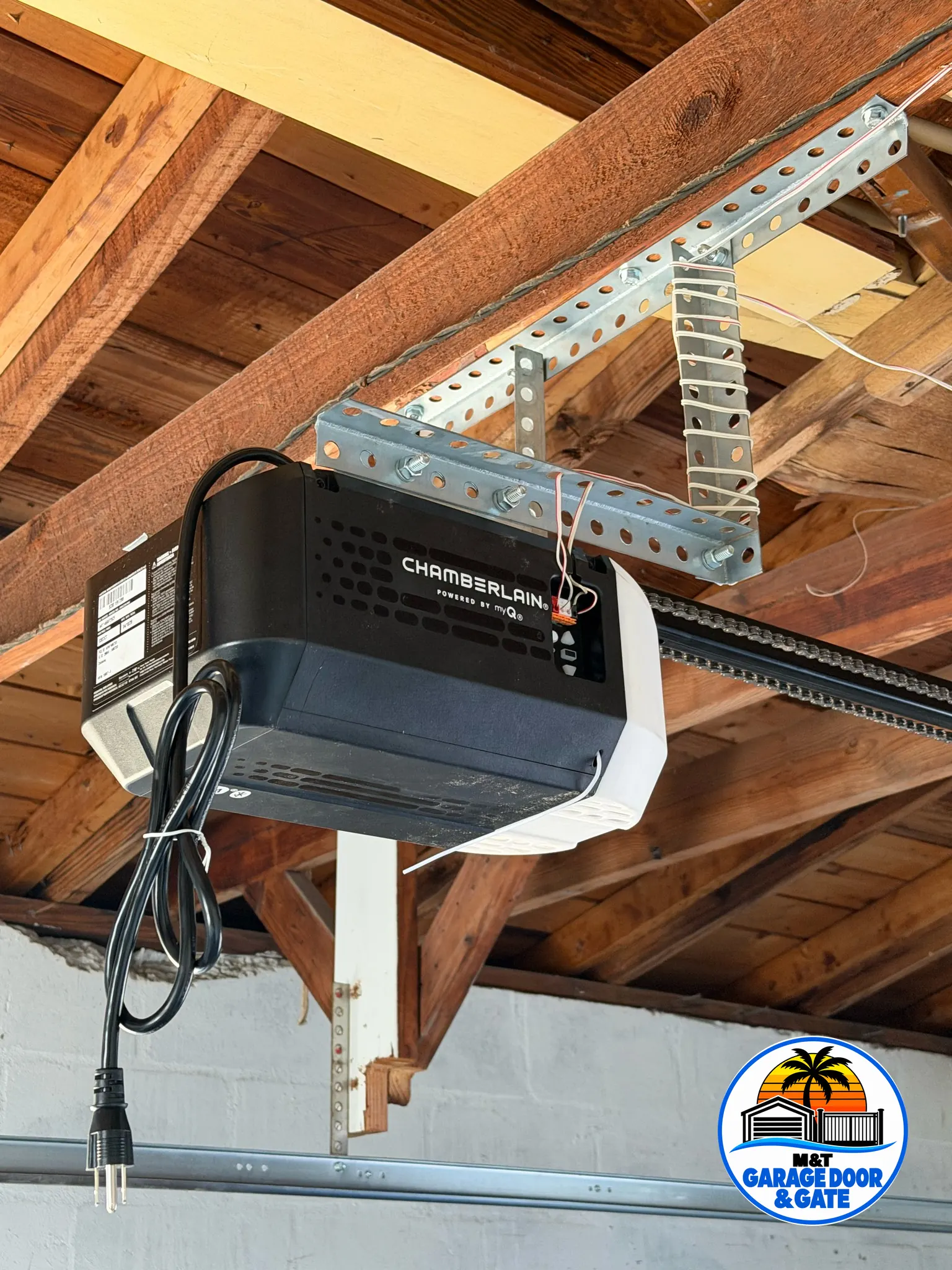
The drive is what moves the door along the rail, and it decides most of the noise you hear.
- Chain drive. A steel chain pulls the trolley along the rail. Durable and common, but the loudest, which matters if a bedroom sits over the garage.
- Belt drive. A reinforced rubber belt in place of the chain. Much quieter, and a good match for attached garages with living space above or beside them.
- Screw drive. A threaded steel rod turns to move the trolley. Fewer moving parts, though it needs the right lubricant to stay quiet.
- Wall-mount, or jackshaft. Hangs on the wall at one end of the torsion bar and drives that bar itself, leaving the ceiling clear. It needs torsion springs, room at the side of the door and an outlet within reach of the unit.
In a typical Tampa Bay garage with an outlet in the ceiling over the rail, a chain or belt unit is the usual choice. If the opener needs a new outlet or new wiring, a licensed electrician does that part.
Lift power and your door
Openers come in motor classes, and the right one depends on the door’s weight and size rather than bigger being better. A single lightweight door needs less than a double steel door with struts and foam inside. The wind-reinforced doors common around the bay are heavier than they look, so they belong at the stronger end of the range.
Plenty of current models run on DC motors with a gentle start and a gentle stop, and they tend to be quieter too. Whatever the motor, the springs still carry the door’s weight. A stronger opener never makes up for a weak spring; it only hides the problem until something else gives.
Features worth having in Tampa Bay
- Battery backup. Runs the door for a limited number of trips in an outage, which matters in storm season. Plan on a fresh battery every few years, and see what to do when the power goes out.
- App control. Wi-Fi models let you check on the door and close it from your phone, handy when you leave in a hurry.
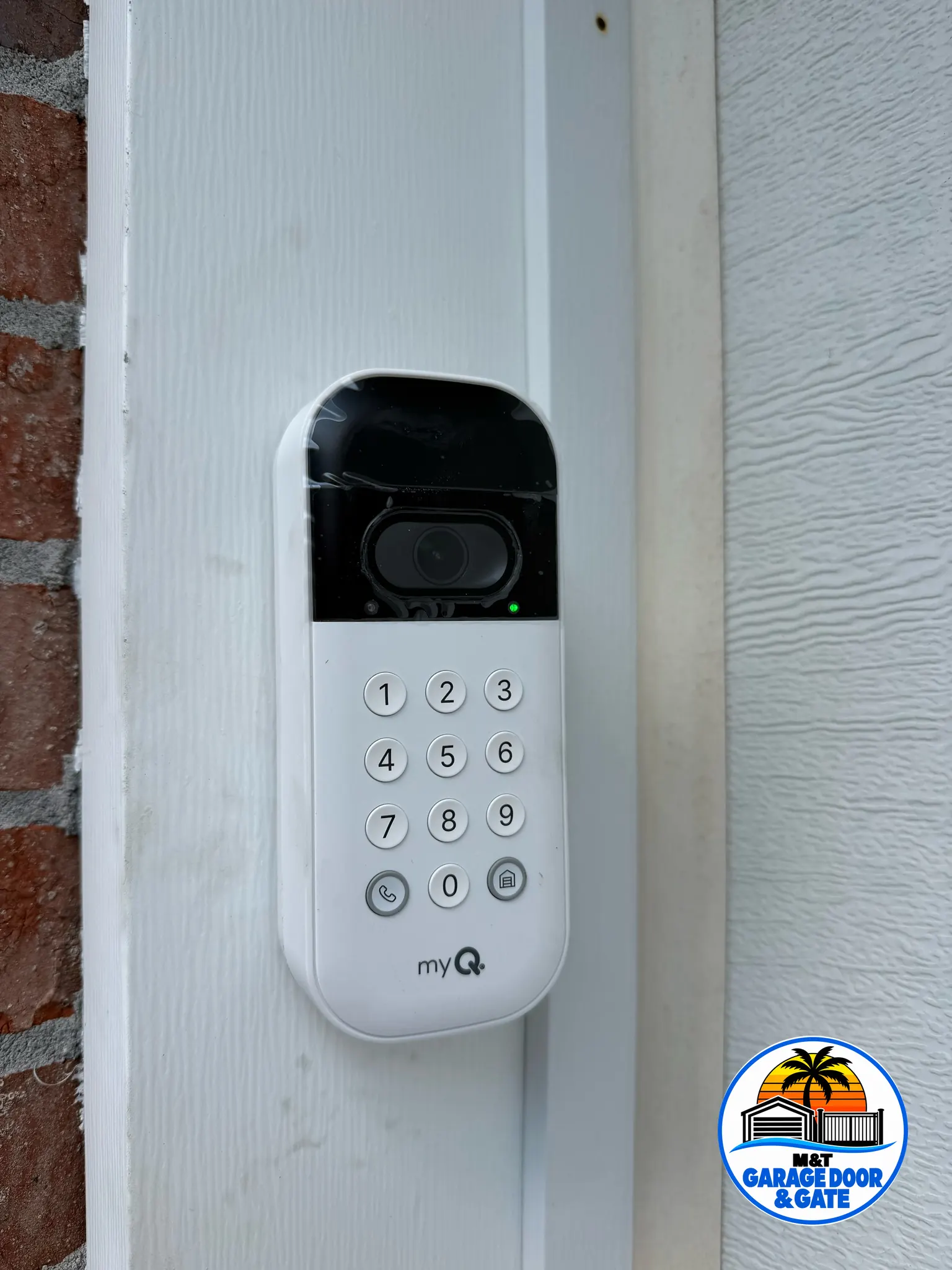
- Keypad. An outside keypad lets family in without a remote. Camera keypads add a view of whoever is at the door.
- Lighting. Bright LED lighting helps in a dark garage. If an LED bulb in an older opener cuts the remote’s range, ask for a bulb made for openers.
- Remote compatibility. Car buttons and older remotes may not pair with every opener. Remote and keypad programming sorts that out after any opener work.
Skip the features you won’t use. Every extra radio and sensor is one more thing that can fail in a hot, humid garage.
How we handle an opener that is past repair
Some openers really are at the end of the road. When an opener is past fixing, we swap it for a plug-in unit on your existing ceiling outlet. After any opener work, the opener is tuned to your door: open and close points, closing force, sensor alignment, an auto-reverse test, and your remotes and keypad paired.
We repair openers from most common makers, including LiftMaster, Chamberlain and Genie, and the LiftMaster opener repair page covers that brand’s boards, gears and myQ pairing. Not sure whether yours is worth fixing? Call (813) 836-7187 or send us your details online, and we will tell you which makes more sense for your opener.