

What salt does to a garage door
Salt pulls moisture out of humid air and holds it against metal. On a garage door that means a damp, salty film on the springs, cables, hinges, rollers, track bolts and the brackets at the bottom corners, nearly all of them steel. Paint and galvanizing slow the process, but every scratch, cut edge and moving joint gives rust a place to begin.
Rust on a moving part is more than a looks problem. It adds friction, so the opener strains harder. It pits spring coils, which then break sooner. It also eats lift cables strand by strand from the bottom up, where they sit closest to a wet floor. By the time a cable looks rough along its length, it has usually been weakening for a while.
The outside of the door suffers too. Steel doors chip and rust along the bottom edge, and the metal strip that holds the bottom seal can corrode until the seal slips out. Aluminum parts do not turn orange, but they pit and go chalky near salt water.
Where salt air is a real factor around Tampa Bay
The closer a house sits to open salt water, the harder the effect. Homes facing the Gulf in Clearwater, on the canals and bay shores of St. Petersburg, along Tampa’s bay front and on the water side of Town ’n’ Country and Gibsonton see it most. Salt air reaches most of the Pinellas peninsula, which has water on three sides.
Inland, things look different. In Lakeland in Polk County, and in Wesley Chapel and Odessa in Pasco County, the trouble is humidity, summer storms and dust rather than salt. The same goes for Brandon, Valrico and Plant City on the Hillsborough side. Steel still rusts there, just more slowly, and the routine below works there at a gentler pace.
A simple salt air garage door care routine
Near the water, a little care on a schedule does more than one big effort a year. You need a garden hose, a soft cloth and a can of lubricant made for garage doors.
- Rinse monthly. Spray the outside of the door, the bottom edge and the lower ends of the tracks with plain hose water, then leave the door open to dry. Skip the pressure washer: it drives water into seals and sensors.
- Wipe the tracks. Run a dry cloth along the inside of both tracks to lift salt and grit.
- Lubricate every two to three months. A light spray on hinges, roller bearings and the spring coils pushes moisture out. Wipe off whatever drips.
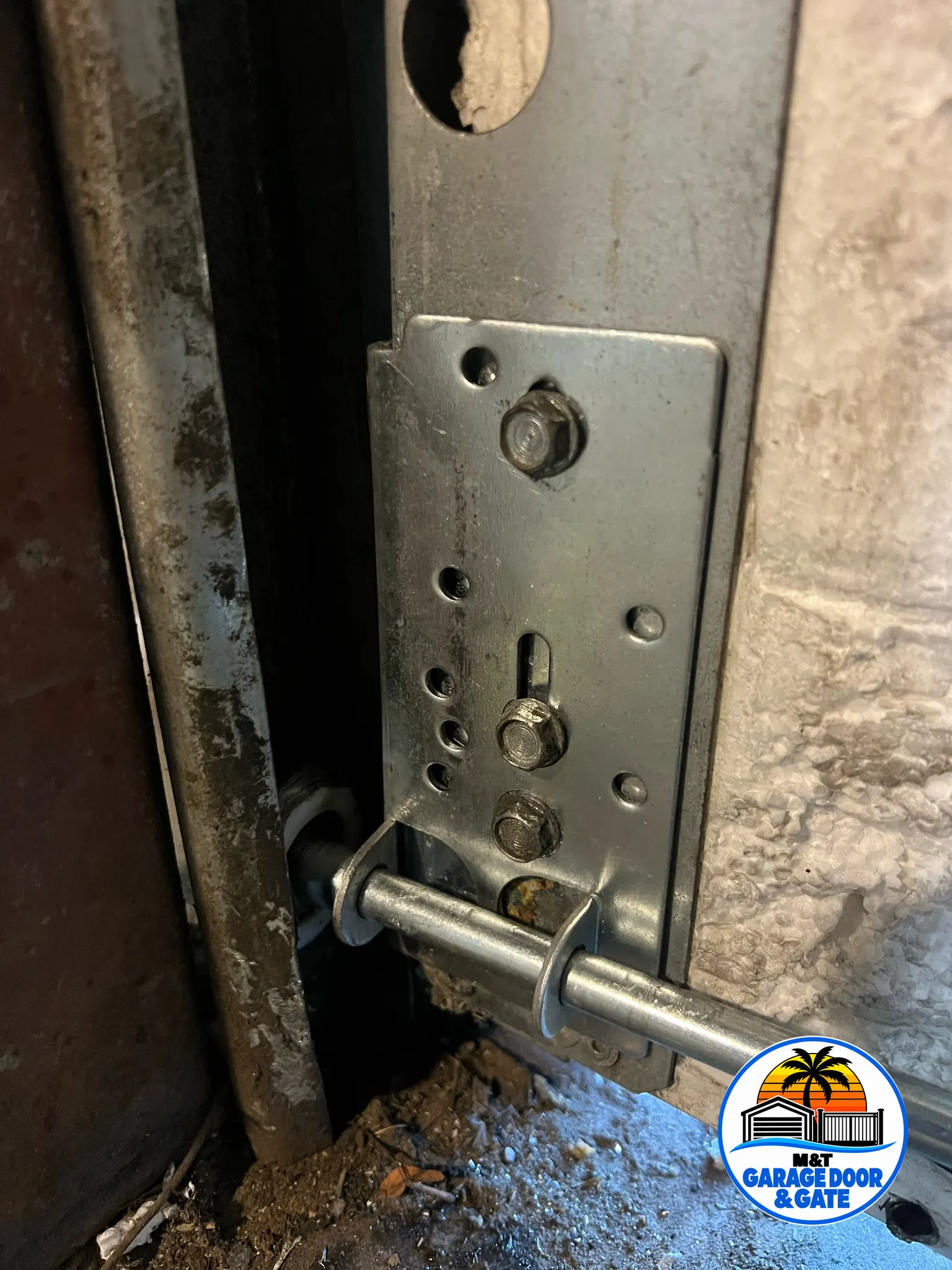
- Watch the bottom corners. The bottom brackets and the cable ends there rust first. Look for flaking, swelling or broken strands, and keep your hands off them.
- Clean the sensor lenses. A salty haze on the lenses can make the two sensors lose sight of each other. Wipe them gently.
After a storm that brought salt spray or high water to your street, do the rinse as soon as it is safe, even if it is not the usual week.
When rust has become a repair
Some rust is cosmetic; some means a part is close to failing. A lift cable with broken strands, or a rusty bulge where it meets the bottom bracket, is near the point of snapping, and a door hanging on one cable can tip and jam. That is garage door cable repair, and the door should sit unused until it is done.
Rollers that no longer turn, scrape along the track or wobble on rusted stems belong under garage door roller repair. Springs with heavy rust or pitting, a bottom bracket that is flaking away, or track bolts rusted thin are worth a visit before hurricane season, when every part of the door gets tested.
Near the water, coated or galvanized hardware and nylon rollers with sealed bearings tend to outlast bare steel. When a part on a coastal door is repaired, those are the versions worth asking about.
A yearly look from a technician
Once a year, a salt-air tune-up catches what a rinse can’t. That means spring tension that has drifted, cable wear hidden at the drums, bearings drying out at the top of the door, and an opener straining against a door that rust has stiffened. Near the Gulf or the bay, scheduling it before June makes sense.
Our garage door care checklist has the monthly safety tests that go with it. When you are ready, choose a visit online or dial (813) 836-7187.