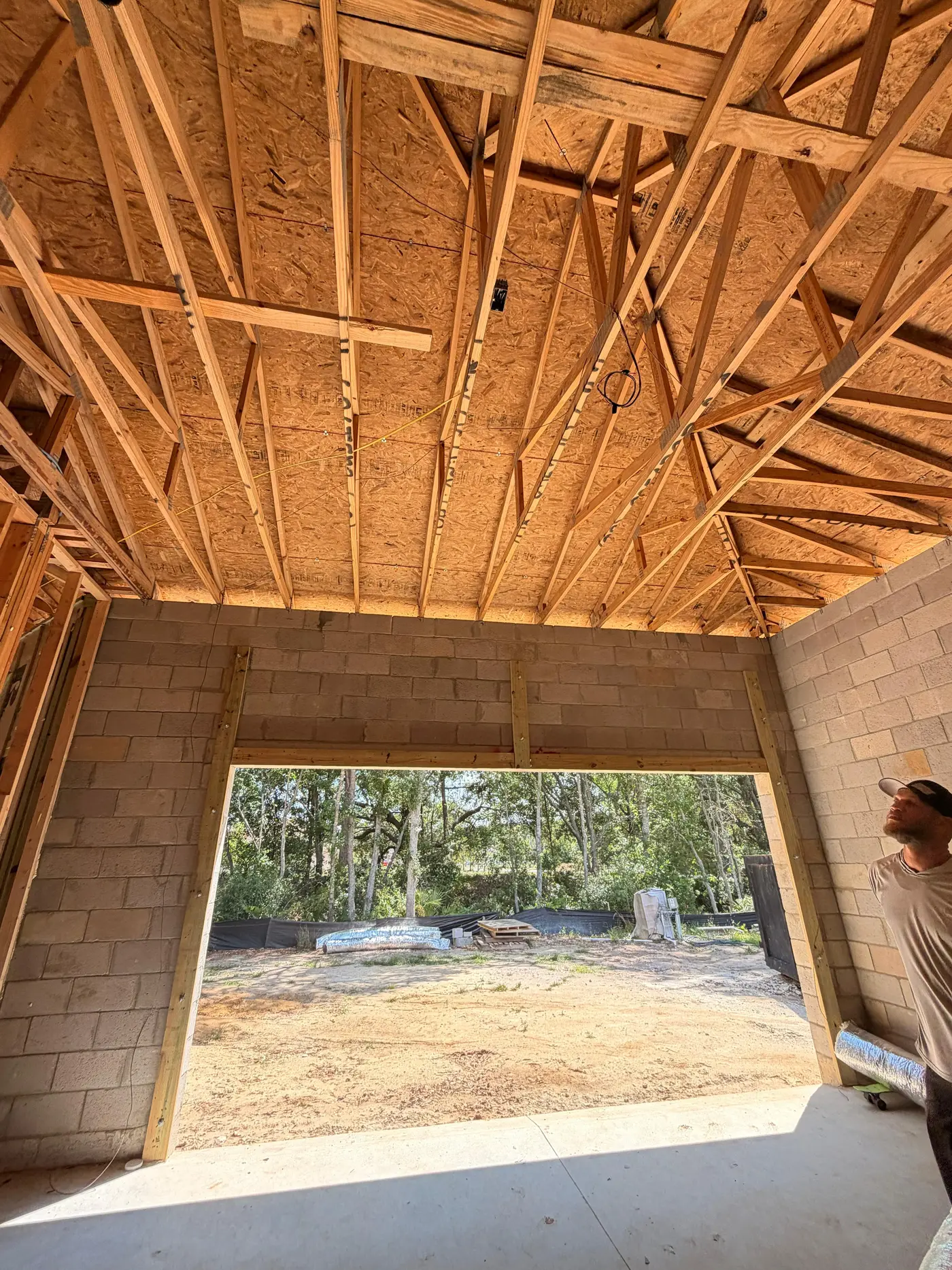
Same-Day Spring Replacement
Heard a loud bang and now your garage door won’t open? You’ve got a broken spring, and you need it fixed today. M&T provides same-day garage door spring replacement across Tampa Bay including torsion springs, extension springs, high-cycle upgrades, and single-to-dual conversions. Stocked parts on the truck, manufacturer-trained technicians, and full warranty on every spring we install.
Same-Day Spring Replacement
A broken garage door spring is one of the most common emergency calls we get, and one of the most disruptive failures a homeowner can experience. Without a working spring, your garage door becomes a 200+ pound dead weight that your opener can’t lift. Your car is trapped inside or stuck outside. You can’t get to work. The whole household routine grinds to a halt until it’s fixed.
The good news: spring replacement is one of the most predictable repairs in our business. We diagnose it fast, we carry the right parts, and we typically have you back to normal operation within a few hours of your call. M&T Garage Door & Gates is a Tampa-based team servicing residential garage doors across Hillsborough County and surrounding Tampa Bay communities. We stock the most common spring sizes on every truck, including standard torsion and extension springs in popular Tampa Bay door sizes plus high-cycle upgrade springs for high-use households.
Our technicians are manufacturer-trained on every major garage door system, which matters more on spring work than almost any other repair. Spring replacement isn’t just swapping a part. It requires correct sizing for your door’s weight, proper winding tension calibration, balance verification, and safety testing before the job is done. A wrong spring (too light or too heavy) wears out fast and can damage your door and opener. We size every spring correctly the first time.
Common Sign
Most homeowners discover a broken spring the morning after it failed, when they try to open the door and something’s clearly wrong. Here are the signs that point clearly to a broken spring rather than another problem.
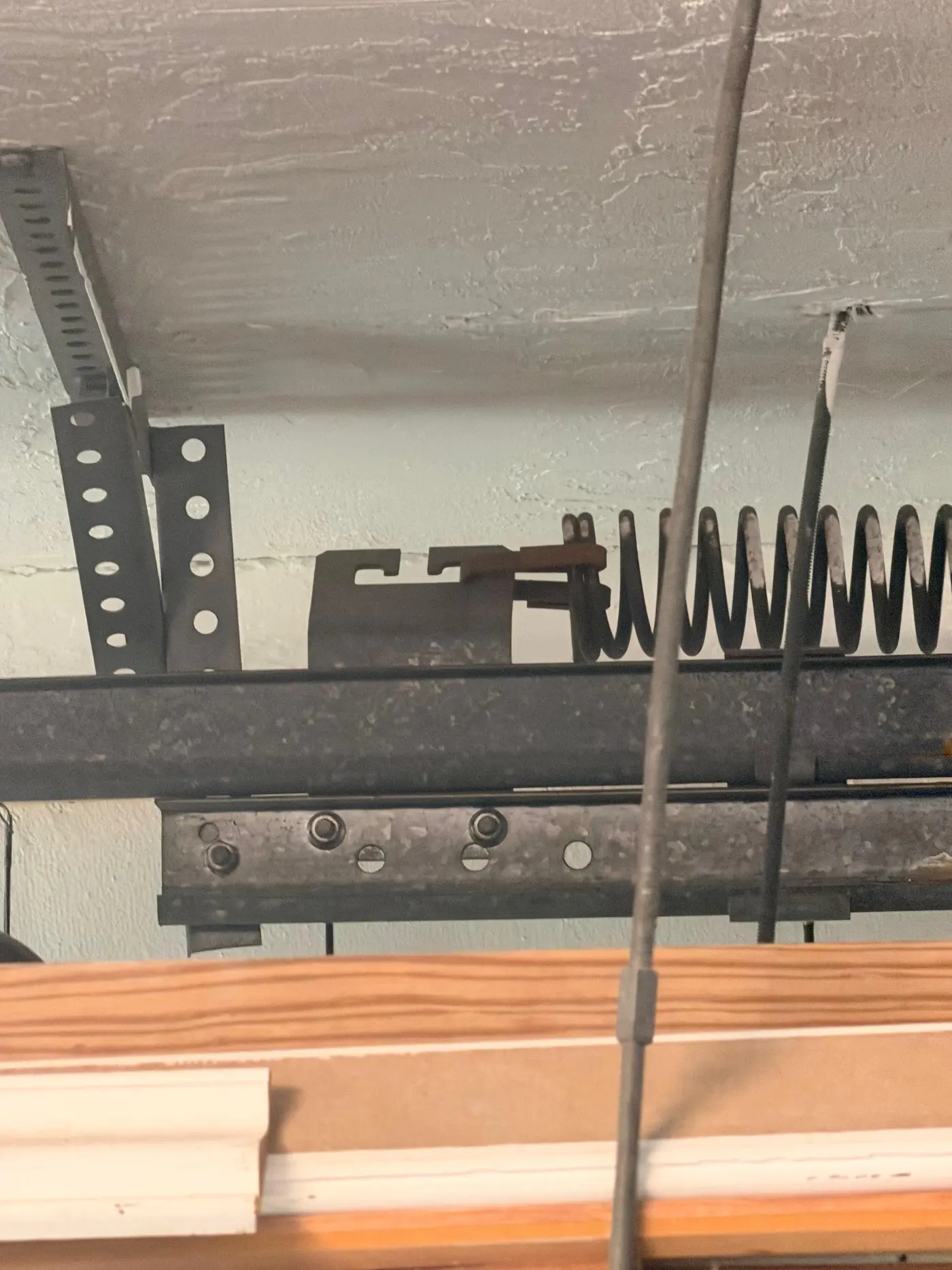
Garage Door Springs Types
Not all springs are the same, and the type your door uses affects pricing, replacement process, and longevity. Here’s what we replace in Tampa Bay.
Not To Try
We’re going to be direct with you: we make money fixing garage doors, but we’d rather you not get hurt trying to do this yourself. Garage door spring replacement is one of the most dangerous DIY projects in home maintenance, and it sends people to the emergency room every year in Tampa Bay alone. Here’s why we strongly recommend professional installation.
A typical residential torsion spring stores enough energy to lift 200 to 400 pounds. When that energy releases unexpectedly (a slipped winding bar, an incorrect installation step, a tool that breaks), it releases instantly with massive force. Springs that fail during DIY installation can shatter eye sockets, break fingers, fracture skulls, and cause fatal injuries. This isn't hypothetical: people die from this every year.
The garage door industry tracks spring-related injuries closely. Hospital admissions from DIY garage door spring incidents include broken bones, severed fingers, eye injuries, concussions, and fatalities. YouTube tutorials make spring replacement look straightforward. They don't show you what happens when something goes wrong, and something goes wrong frequently for inexperienced installers.
Proper spring replacement requires winding bars (specific to the spring size), tension calibration equipment, vise grips for cable management, and proper PPE. These tools are not available at typical home improvement stores. Substituting other tools (screwdrivers, rebar) is how most DIY injuries happen.
Even when DIY spring installation doesn't injure anyone, it frequently damages other components: stripped cable drums, bent shaft, damaged tracks from improper balancing, and operator damage from incorrectly sized springs. We've been called multiple times to fix DIY spring jobs that turned a $250 professional repair into a $1,500 full system replacement.
Homeowners insurance and health insurance often have exclusions for injuries or property damage resulting from improperly performed home repairs. A spring failure during DIY installation could leave you covering the medical bills and the property damage out of pocket. Professional installation comes with our liability coverage, manufacturer warranty, and our workmanship guarantee.
When your spring breaks, you need it fixed today. Cars are trapped, schedules are disrupted, and every additional hour the door is out means another hour your home is partially exposed.
We dispatch licensed technicians daily across Hillsborough County and surrounding Tampa Bay communities, with same-day availability for most spring replacement calls. For service requests placed before 2pm on a weekday, we typically have a tech on-site the same afternoon, fully stocked with the most common torsion and extension spring sizes plus winding bars, calibration equipment, and replacement cables.
Most spring replacements finish in a single 60 to 90 minute visit. Single-to-dual conversions take a bit longer (typically 90 to 120 minutes). After-hours emergency service is available for situations where same-day daytime service isn’t enough.
Common Questions
Standard 10,000-cycle springs are rated for 10,000 open/close cycles. At a typical 3 to 5 cycles per day (entering and leaving the house twice a day), that’s roughly 7 to 12 years of service. High-use households (5+ cycles per day) wear standard springs out faster. Light-use households can sometimes get 15+ years from standard springs, though by then other components are usually wearing out too.
A “cycle” is one full open and one full close. If you leave the house and come back twice a day, that’s 4 cycles. If you also use the garage as a primary entry to the house, you might be cycling 6 to 8 times per day. At 8 cycles per day, a 10,000-cycle spring lasts just over 3 years. Worth knowing before deciding whether to upgrade.
Florida humidity accelerates spring corrosion, especially on uncoated oil-tempered springs. Coastal salt air in Tampa Bay accelerates corrosion further. Tampa Bay’s climate means typical Tampa springs reach end-of-life on the lower end of the 7 to 12 year range, and uncoated springs in coastal areas can fail at 5 to 7 years.
Even before springs break completely, they show wear signs. The door starts feeling slightly heavier when operated manually. Operation gets slightly slower. The opener works a little harder than it used to. You hear a slight “popping” or “groaning” sound during operation. Visible rust or corrosion on the spring coils. If you’re noticing these signs and your springs are 7+ years old, scheduling proactive replacement (vs. waiting for failure) avoids the emergency call and lets you upgrade to high-cycle on your own timeline.
On dual-spring systems, both springs are the same age, have the same usage, and have the same wear. When one fails, the other is typically months from failing too. Replacing only the broken spring saves money short-term but typically results in a second emergency service call within 3 to 12 months. Replacing both at once costs about 60 to 75% of two separate visits, with no surprise emergency.
Schedule Consultation
Whether you've got a broken loading dock door that needs same-day repair, a commercial property planning multi-door replacement, or a property management portfolio looking to consolidate door service, we're ready to help. Same-day commercial repair, free on-site assessments for new installations, and maintenance contracts that minimize downtime and document compliance. Call M&T Garage Door & Gates today at (813) 796-0668. Stock parts for major commercial brands. After-hours service available. Multi-location account management. Code-compliant installations with full documentation.
Why M&T
Our trucks roll fully stocked with the most common torsion and extension spring sizes for typical Tampa Bay residential doors, plus high-cycle upgrade options and galvanized coatings for coastal homes. Stocked parts mean most spring replacements finish in a single visit, not "we'll order it and come back next week."
For most service calls placed before 2pm on a weekday, we have a tech on-site the same afternoon. Same-day availability is the difference between "trapped car for one day" and "trapped car for a week."
Spring replacement isn't just swapping parts. Correct sizing, proper winding tension, balance calibration, and safety testing all require training. Manufacturer-trained technicians get this right the first time. Untrained installers often install incorrect springs (too light or too heavy for the door weight), which fails fast and damages other components in the process.
Every spring replacement we perform follows a documented safety protocol: door secured before work begins, proper winding bars used (never substituted), tension verified at each step, safety cables installed on extension spring systems, and full balance testing before the job is complete. Safety isn't just for our techs; it protects your door, your family, and your warranty.
Every spring we install comes with a one-year warranty on parts and labor. If anything fails in the first year due to defective parts or improper installation, we come back and fix it at no charge. High-cycle springs come with extended warranty terms based on cycle rating.
Where We Work
We dispatch daily from our Tampa office at 5103 W Knox St with same-day availability across the region. Find your neighborhood below, or see every community we cover on our service areas page.
Fastest response typically within an hour
Town ‘N’ Country, Carrollwood, Westchase, Citrus Park, South Tampa, Hyde Park, Davis Islands, Gibsonton, Palm River-Clair Mel
Largest service area outside central Tampa
Brandon, Riverview, Valrico, Bloomingdale, Fish Hawk, Apollo Beach, Egypt Lake-Leto, University Area, East Lake-Orient Park
North Hillsborough & Pasco County
Lutz, Land O’ Lakes, New Tampa, Temple Terrace, Wesley Chapel, Tampa Palms, Progress Village
How It Works
Four steps from your emergency call to working garage door.
Call (813) 796-0668. We get the basics over the phone (door size, single or dual spring, urgency level, your location) and dispatch a tech with the right springs stocked. For most Tampa Bay calls before 2pm, we have a tech on-site the same afternoon.
Tech arrives, confirms the spring problem (vs. cable, opener, or other issues that can mimic spring symptoms), assesses door weight and existing spring configuration, and provides a firm written quote. No work begins until you've approved the quote. If we recommend dual replacement on a single-failure or single-to-dual conversion, we explain the reasoning so you can make the call.
With your approval, we secure the door, remove the broken spring (and the unbroken one if doing dual replacement), install correctly sized new springs, wind to proper tension based on your door's weight, and calibrate balance. Typical replacement time: 60 to 90 minutes. Single-to-dual conversions: 90 to 120 minutes.
Before we leave, we test the door operation manually (should lift easily by hand to confirm balance), test opener operation, verify safety auto-reverse functions, and walk you through what we did and what to watch for. You get a written warranty document and a recommendation for any other components that may be approaching end-of-life.
FAQs
Most spring replacements in Tampa Bay fall between $200 and $475 fully installed, depending on whether you’re replacing one or two springs, spring type, cycle rating, and door weight. Single torsion replacement typically runs $200 to $325. Dual replacement (recommended for double-car doors) typically runs $325 to $475. High-cycle upgrades and single-to-dual conversions run higher. We provide a firm written quote on-site before any work begins.
Most spring replacements finish in a single 60 to 90 minute visit. Single-to-dual conversions take 90 to 120 minutes. Complex situations (older doors with custom spring configurations, doors needing additional component replacement) can take longer, but those are rare. Most customers are back to normal door operation by afternoon if they call in the morning.
Yes. Both springs are the same age, have the same usage, and have the same wear. When one fails, the other is typically months from failing too. Replacing only one creates a near-certainty that you’ll be calling us again within 3 to 12 months for the second emergency. Replacing both at once costs about 60 to 75% of what two separate visits would cost.
Torsion springs mount horizontally on a shaft above the closed door. Standard on modern doors. Higher cost but longer-lasting and safer when they fail. Extension springs stretch along the horizontal tracks on either side of the door. Common on older or smaller doors. Lower cost but shorter lifespan and more dangerous when they fail (a broken extension spring can become a projectile if safety cables aren’t installed). If you have extension springs without safety cables, we’ll always add cables during replacement at minimum.
Standard 10,000-cycle springs typically last 7 to 12 years at typical residential use (3 to 5 cycles per day). High-use households wear them out faster. Tampa Bay’s humidity and coastal salt air accelerate spring corrosion, so Tampa springs often reach end-of-life on the lower end of that range. High-cycle springs last 2 to 10 times longer depending on the upgrade level. We recommend upgrading to high-cycle if your household uses the garage door more than 5 times per day.
No. Stop using it immediately. Without spring counterbalance, the opener is trying to lift the full 200+ pound door weight, which can burn out the opener motor permanently. The door can also fall fast and hard without spring tension, creating serious injury risk to anyone underneath. Disconnect the opener emergency release if possible (pull the red cord) and wait for a tech.
Worth considering if you use the garage door more than 5 cycles per day. Standard 10,000-cycle springs at 5 cycles per day last about 5 to 6 years. At 8 cycles per day, they last just over 3 years. High-cycle springs at 25,000 to 100,000+ cycles last proportionally longer. The upgrade premium ($50 to $400 per spring) typically pays back through extended service intervals.
Several reasons, most of them not in your favor. Cheap quotes often mean: wrong-size springs (will fail fast), uncoated oil-tempered springs (corrode faster in Florida), single-spring replacement on a dual system (second emergency in months), no warranty, or pricing that excludes labor and add-ons until the tech arrives. Always confirm: spring size, cycle rating, finish (galvanized vs. oil-tempered), warranty terms, and whether the price is fully installed.
Usually no. Spring failure from normal wear-and-tear isn’t covered by most homeowners policies. Spring failure from storm damage, vandalism, or impact damage may be covered depending on your policy. Worth checking your specific policy if the spring failure coincided with any of those events.
Please don’t. Garage door springs are under extreme tension and cause serious injuries to DIYers every year, including broken bones, eye injuries, and fatalities. The tools required (winding bars sized to your specific spring, tension calibration equipment) aren’t available at typical home improvement stores. DIY mistakes also frequently damage other components, turning a $250 professional repair into a $1,500 full system replacement. Professional installation costs less than your emergency room copay.