
What the lift cables actually do
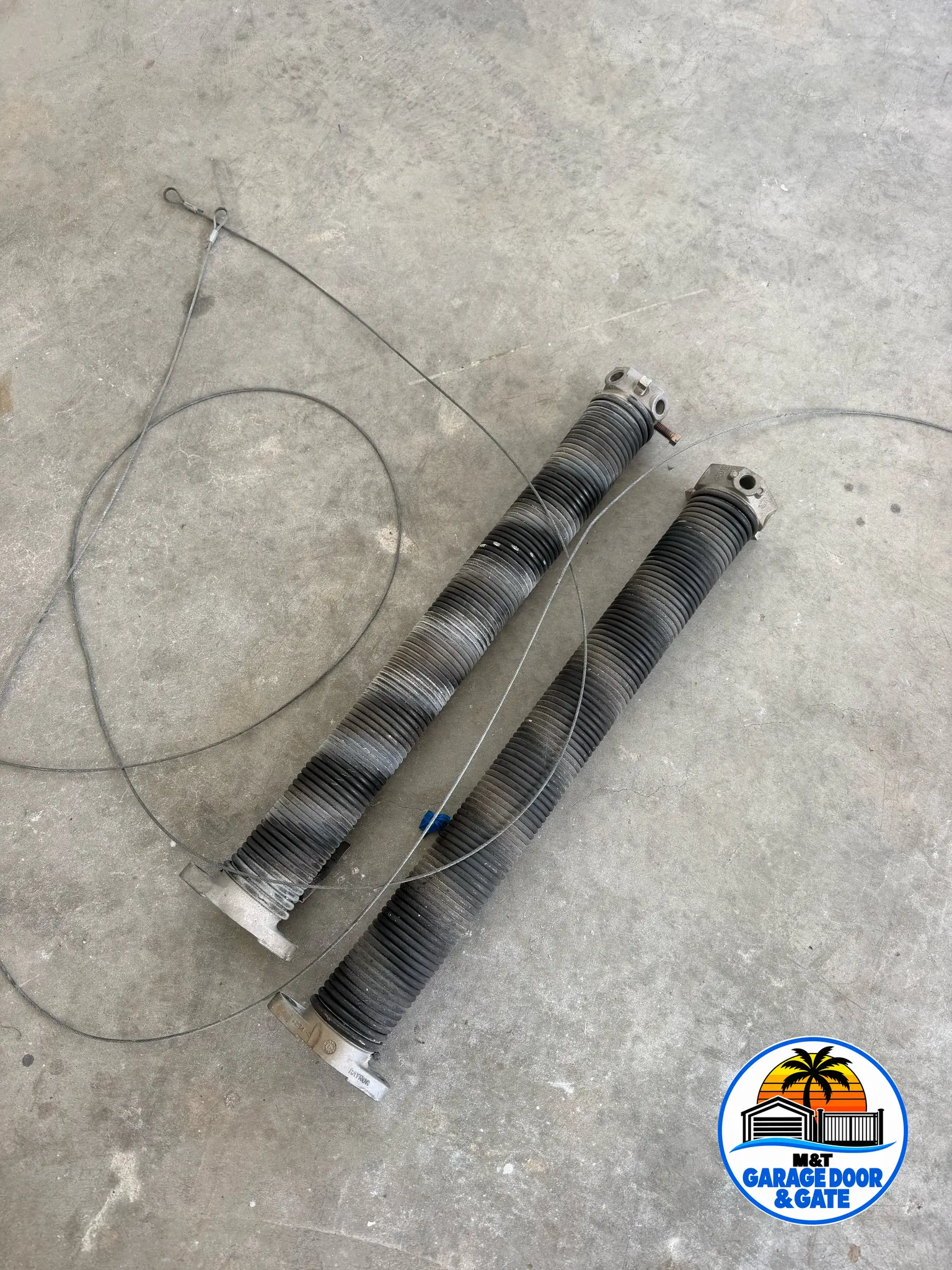
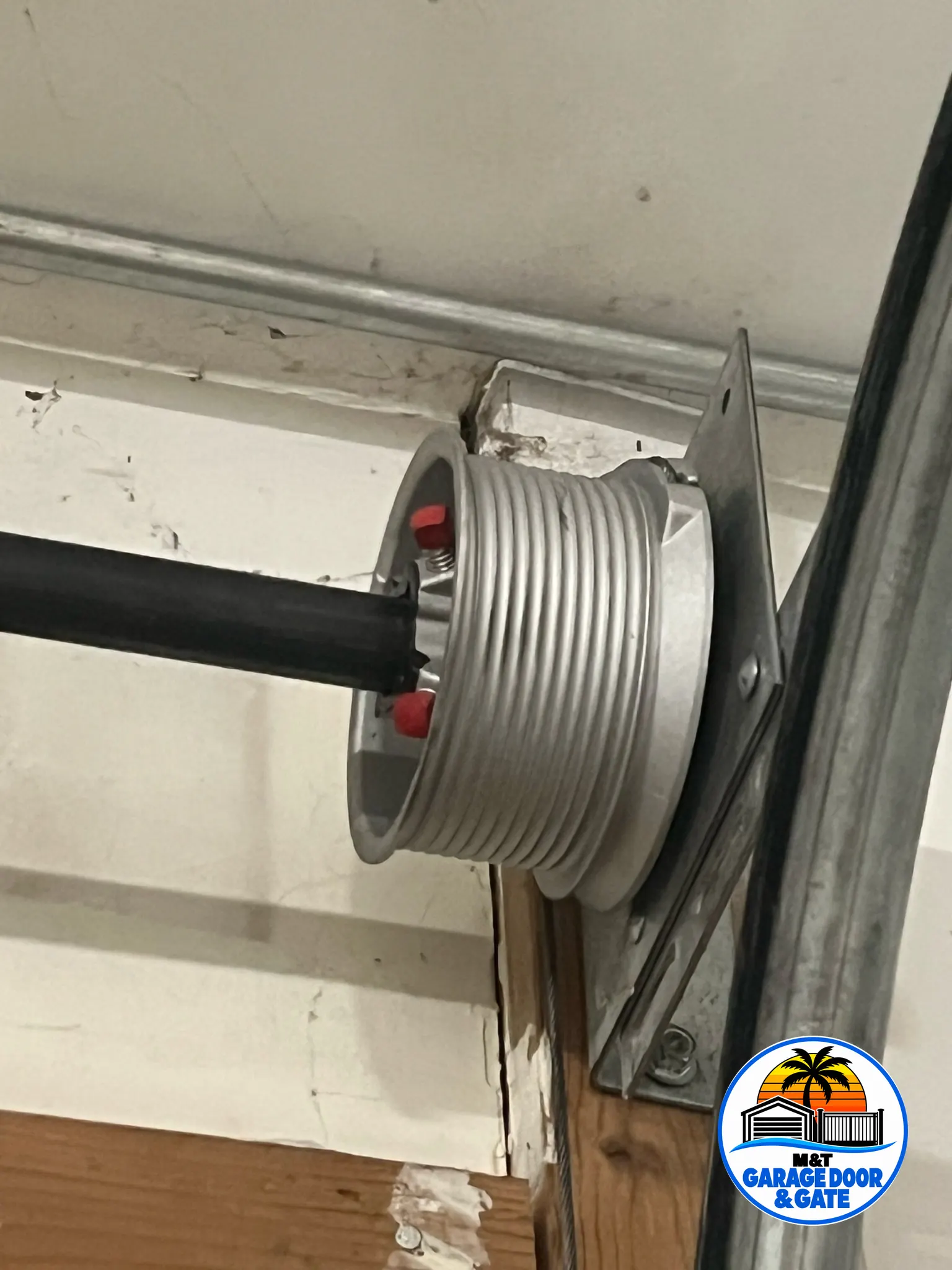
The springs hold the energy, but the cables do the pulling. On a torsion system, a steel cable runs from each bottom corner of the door up the side of the opening to a grooved drum on the spring shaft. As the springs unwind, the drums turn and reel both cables in at the same rate, so the door rises level.
Doors with extension springs use their cables another way: each one runs over a pulley on the spring and ties off near the top of the track. Either way, the two sides must carry the same load. When one cable stretches, slips or breaks, the door tilts, binds and can jump out of its tracks.
Signs your cables need attention
Most cable damage can be seen from a few steps back, with the door closed and the light on. Check for these:
- Broken strands or a fuzzy, frayed look near the bottom corner, where the cable hooks onto the door.
- Orange rust on the cable, most often down by the floor where water and salt collect.
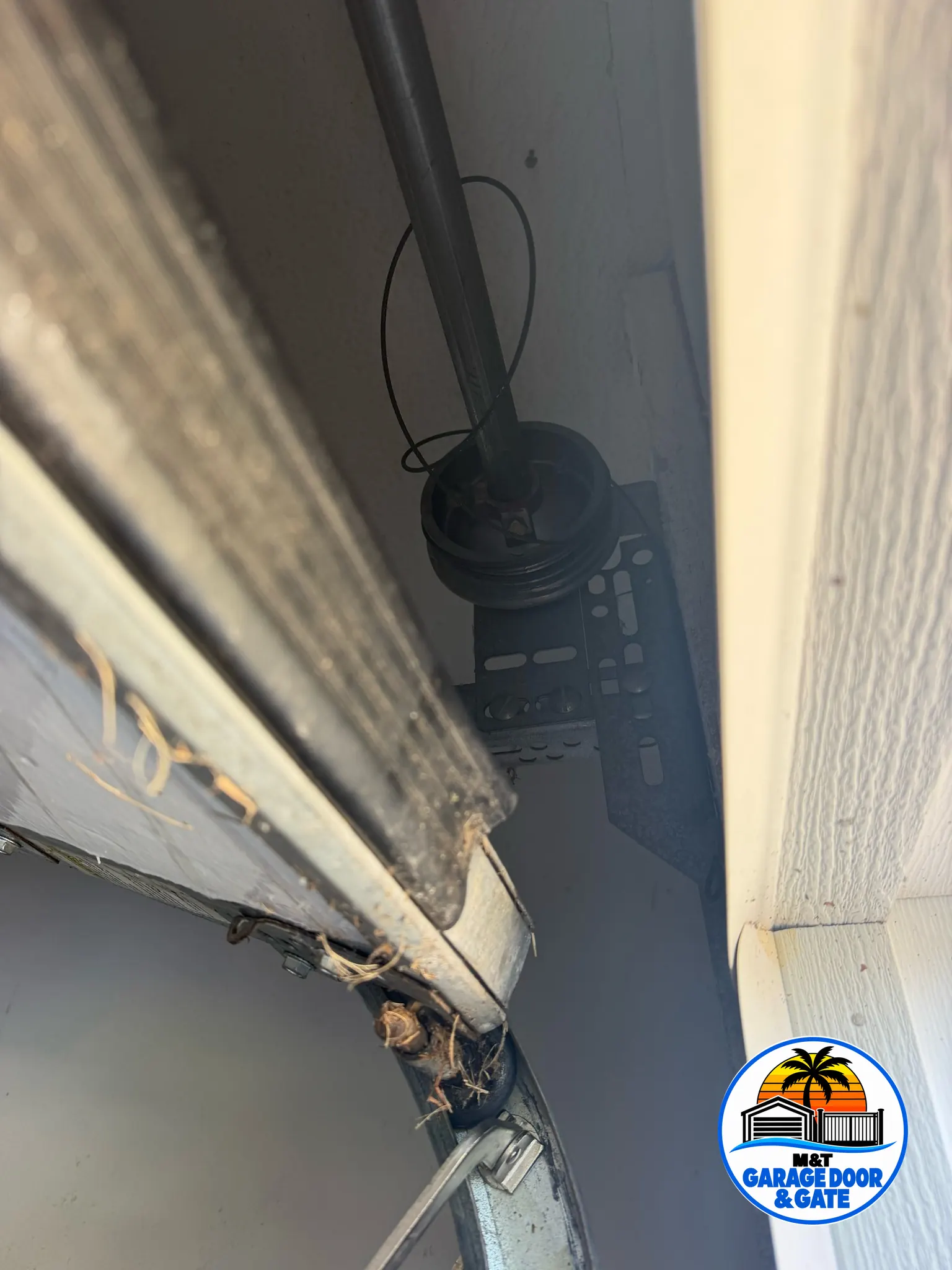
- A cable hanging slack with the door closed, or loops of cable tangled beside the drum.
- The door rising with one side higher than the other, or stopping partway with a jerk.
- A cable that has jumped the grooves on its drum and wound back over itself.
- One cable snapped, and the door hanging crooked in the opening.
With any of these, leave the door parked in place and book the cable repair. A frayed cable can let go without warning, and the side it was holding will fall.
Why cables fail around Tampa Bay
Salt air is the big one near the water. The lower end of each cable sits close to a slab that gets wet from rain and blowing spray, so rust starts there, and rusted strands break one at a time. Doors in Pinellas and along the bay see it first, as our page on how salt air wears a garage door explains.
Other causes are mechanical. A spring that snaps throws its load onto the cable in one jolt. Worn rollers or a bent track make the door bind, so one cable goes slack. A door that comes down on a car or a trash bin can toss a cable off its drum. A drum with loose set screws slips on the shaft and puts the two sides out of step.
That is why a cable visit is never only about the cable. A broken spring is often what started it: see spring replacement and our broken spring advice.
How a cable repair is done
Cable work begins with the spring tension. The door is clamped in its track and the torsion springs are unwound, so the cables go slack and come off without a fight. Doing it in any other order is how drums spin and hands get hurt.
We replace cables as a pair, since the second one is the same age and has lived through the same weather. The drums, the bottom brackets and the center bearing get a close look while everything is apart, and anything cracked or heavily rusted is changed. Then the springs are wound back, both cables are set to equal tension and the door is leveled.
If the door came out of its tracks when the cable broke, off-track repair and sometimes track repair become part of the same visit.
Cable repair near the water and inland
We fix lift cables from Clearwater and St. Petersburg on the Pinellas side to Town 'n' Country and Gibsonton along Hillsborough's shoreline, and inland in Wesley Chapel and Lakeland, where humid air does the rusting instead of salt.
How a visit goes
- Secure the doorThe door is clamped so it cannot move while the cables are off.
- Take the load offSpring tension comes off first, so neither cable is under strain when it is removed.
- New cables, checked drumsBoth cables are replaced, and the drums, bottom brackets and bearings are inspected and changed if worn.
- Wind, level and runThe springs are wound back, the cables set even, and the door run up and down until it travels level.