

Why maintenance matters more in this climate
A garage door is a set of moving steel parts in a room that is rarely air-conditioned. Through a Tampa Bay summer the garage stays hot and damp for months on end. Lubricant thins and collects grit, bare steel starts to rust, and rollers that turned freely in spring can stiffen by August. The opener then works harder to make up for it.
Most failures give notice first. A new squeal, a jerk at the same spot every time, or a door that drifts down when stopped halfway are early hints, and a short look each month catches them. This garage door maintenance checklist is built for that: plain checks, nothing more than a rag and a can of lubricant, and nothing that puts your hands near stored spring energy.
One rule runs through all of it. Look, listen and lubricate, but leave springs, cables, the bottom brackets and anything else under tension to someone with the right tools.
Monthly checklist: look and listen
Pick a dry day, open the garage, and work through these with the door in plain view.
- Run the door and watch it. It should travel evenly, without jerking, scraping or hesitating at one spot.
- Listen for new noises. Grinding, popping or a squeal that was not there last month is worth writing down.
- Look at the springs. Rust, uneven gaps between coils or a spring that looks stretched on one side should be checked.
- Look at the cables. Frayed strands near the bottom corners mean a cable is wearing out. Look only; do not touch.
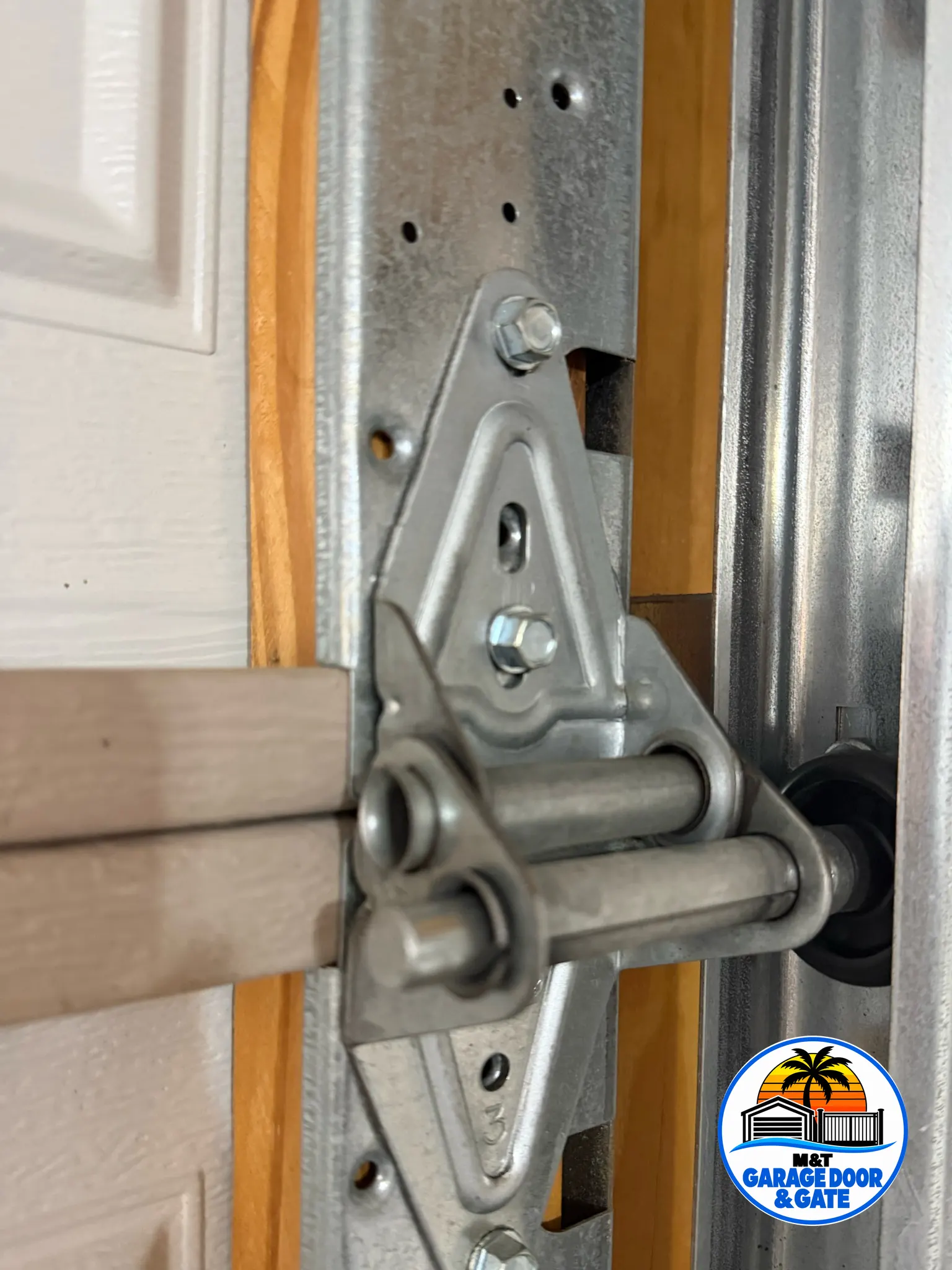
- Check the rollers and hinges. Cracked nylon wheels, wobbly rollers, or hinges with cracks or missing bolts are early repairs.
- Check the bottom seal. Daylight under a closed door, or a seal that is flattened, split or brittle, lets in water, insects and heat.
Monthly safety tests for the opener
Two tests tell you the opener’s safety systems still work. Clear the doorway of people, pets and cars first.
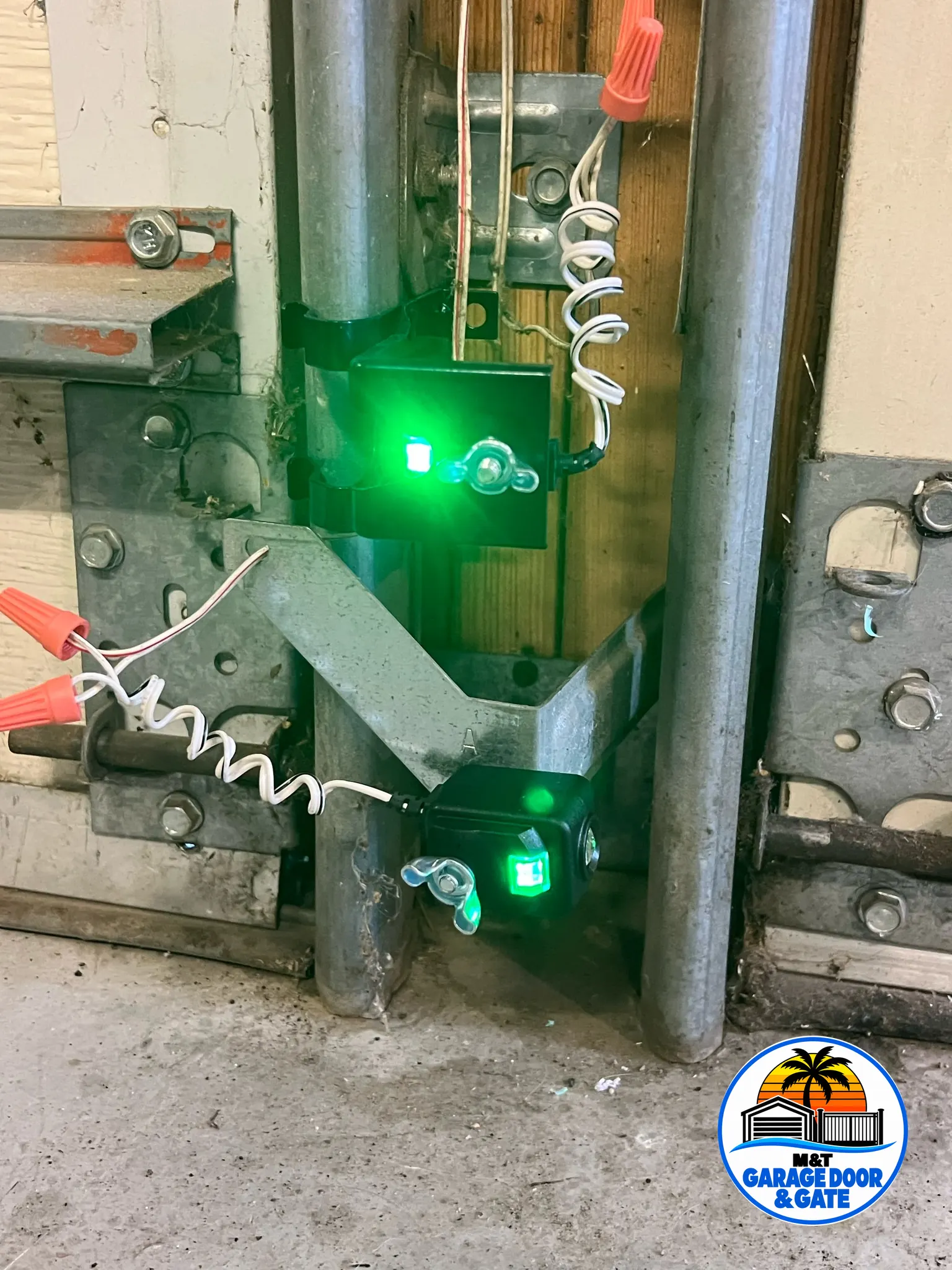
- Beam test. Start closing the door and pass a broom handle through the invisible beam between the sensors near the floor. The door should stop and go back up.
- Reverse test. Lay a short piece of lumber flat on the floor under the middle of the door and close it. The moment the door touches the board it should reverse. If it presses down instead, stop using the opener and have the force setting checked.
- Balance check. Start with the door shut, then pull the red release so the opener lets go. Raise the door by its handle until it is roughly halfway, keeping both hands on it. A balanced door stays roughly where you hold it. If it sinks or rises on its own, the springs need adjusting, which is our job, not yours.
Afterward, lower the door and reconnect the opener as its manual describes. Wipe the sensor lenses while you are down there, and try each remote and the keypad: a remote that only works up close usually needs a battery.
Seasonal care: lubricant, seals and salt
Every few months, spray a light garage door lubricant or silicone spray on the hinges, the roller bearings and the spring coils, then wipe off the excess. On nylon rollers, aim at the bearing in the center, not the wheel. Skip the tracks themselves: grease in a track catches dirt and makes rollers skid instead of roll, so a dry cloth is all a track needs.
Near the Gulf or the bay, rinse the outside of the door and the lower corners with a garden hose once a month or so, then let it dry with the door open. Salt left on steel holds moisture and keeps rust going. Our salt air guide explains which parts suffer first.
Before storm season, look hard at the weather seals along the bottom and sides. A torn, flattened or missing seal lets wind-driven rain into the garage, and weather seal repair is a small job that keeps the floor dry. If your opener carries a backup battery, pull the opener’s plug for a moment and confirm the door still moves on battery.
What a yearly tune-up adds
Some maintenance needs tools and practice. Setting spring tension, checking cable wear where it wraps the drums, snugging track brackets to the wall, testing the opener’s force and limits, and changing worn rollers and hinges all fall in that group. A garage door maintenance visit covers them, along with the safety tests above.
Once a year suits most homes. Doors in heavy daily use, doors facing the water, or a heavy wind-reinforced build may deserve a look more often. If anything on the monthly list turns up, it is simpler and safer to deal with it early: reserve a tune-up online or ring (813) 836-7187.