

What a storm does to a garage door
Summer thunderstorms bring sudden gusts and power surges, and tropical storms add hours of wind and rain. Each can hurt a garage door in its own way:
- Bent tracks and track brackets, from gusts or from debris striking the door
- A door off its track, hanging on a few rollers
- Lift cables thrown off their drums when the door was pushed in and sprang back
- Cracked hinges and strut bolts pulled loose from the panels
- An opener dead after a power surge or a thunderstorm strike close to the house
- Water at the bottom seal, and rusted parts or a soaked opener after the garage flooded
Storm damage is often hidden. Wind can push a closed door inward and let it spring back, so from the driveway it looks fine. Inside, a cable may sit slack on its drum or a roller may have popped out of the track. The first time someone presses the button, the door jams or drops on one side, and what was a cable job turns into a door hanging off its tracks.
First steps after a storm
Before anyone runs the door, look at it from inside with the lights on. Both cables should be tight and wound on their drums, every roller should sit inside its track, and the bottom edge should be level. If anything looks off, unplug the opener and call (813) 836-7187.
Take pictures before anything is moved: the whole door from outside, the inside with both tracks, close-ups of any bend or dent, and the branch or object that hit it. Your insurer may ask for them, and they help us see what failed.
Stay clear of the springs, cables and bottom brackets, even when a cable hangs loose; they hold the door's weight under tension. Where floodwater reached the garage, leave the opener unplugged until everything has dried and someone has checked it.
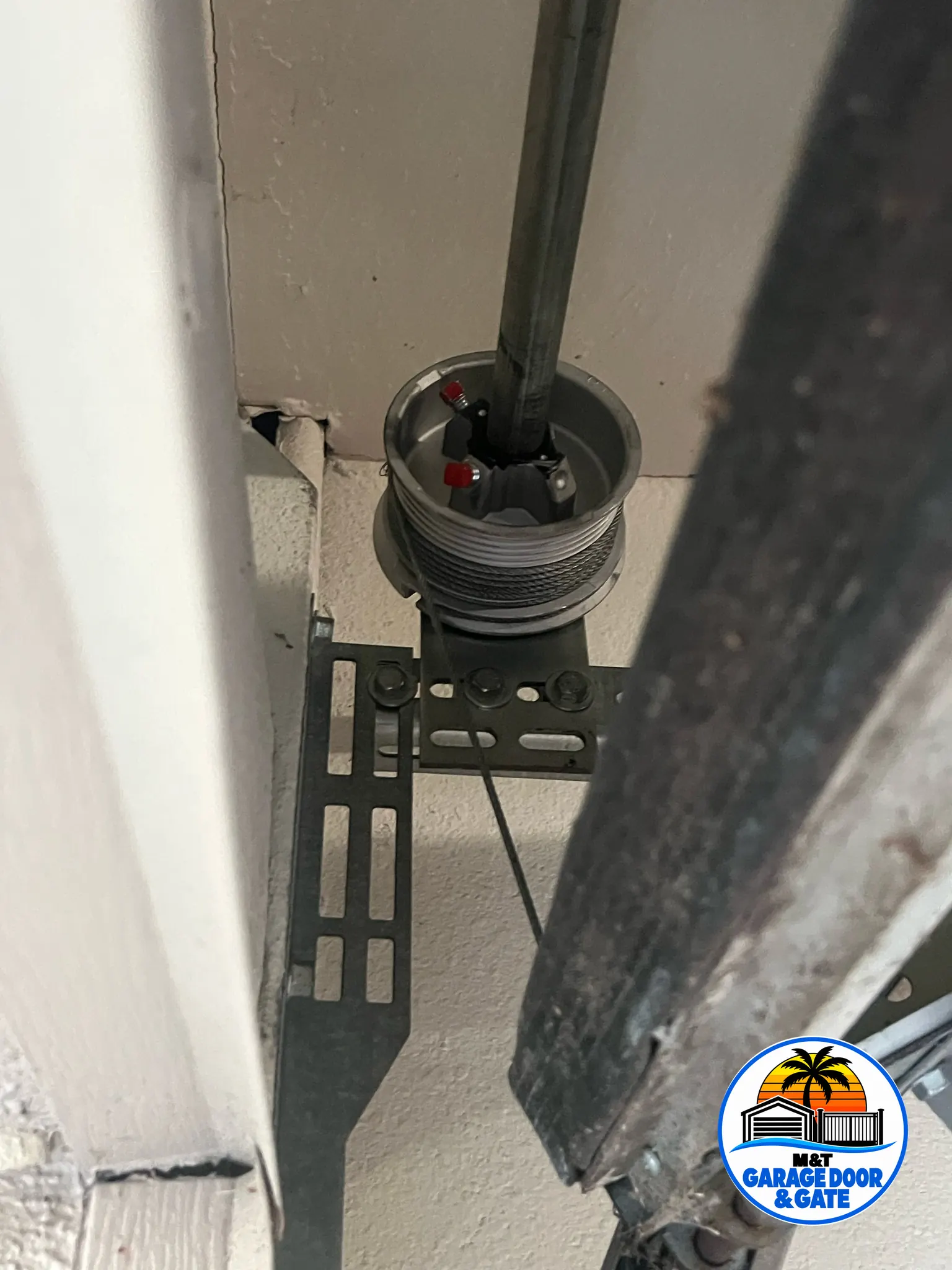
Doors off their tracks and bent hardware
A door that left its tracks is the most dangerous storm repair, because it can fall. We secure the door where it hangs, lower it under control, then straighten bent track where the steel allows and fit fresh track where it has kinked. With the rollers back in, we find out what let the door out: a bent track, a loose bracket or a worn roller. Our off-track repair page goes into that work.
Cables need the same care. When wind pushes a door in, the cable can go slack and slip off its drum. We take the load off, seat the cable back in the drum grooves and check the spring's tension before the door moves again. Cracked hinges and strut brackets get changed so the door flexes as one piece again.
Openers after thunderstorms and power surges
A bolt does not have to hit the house to hurt an opener. A strike close by, or the surge when power returns after an outage, can kill the logic board or the radio receiver. The opener may be dead, or it may run but ignore the remotes, flash its light or reverse for no reason.
We test the power, the board, the safety sensors and the travel settings, and repair what failed. Many surge faults turn out to be a board or a receiver rather than the whole unit, as our opener repair page explains. When an opener is too far gone, we fit a plug-in unit on your existing ceiling outlet.
If the power is still out, lift the door by hand after pulling the red release cord, and only with the door closed. Reconnecting it afterward is covered in what to do after a power outage.
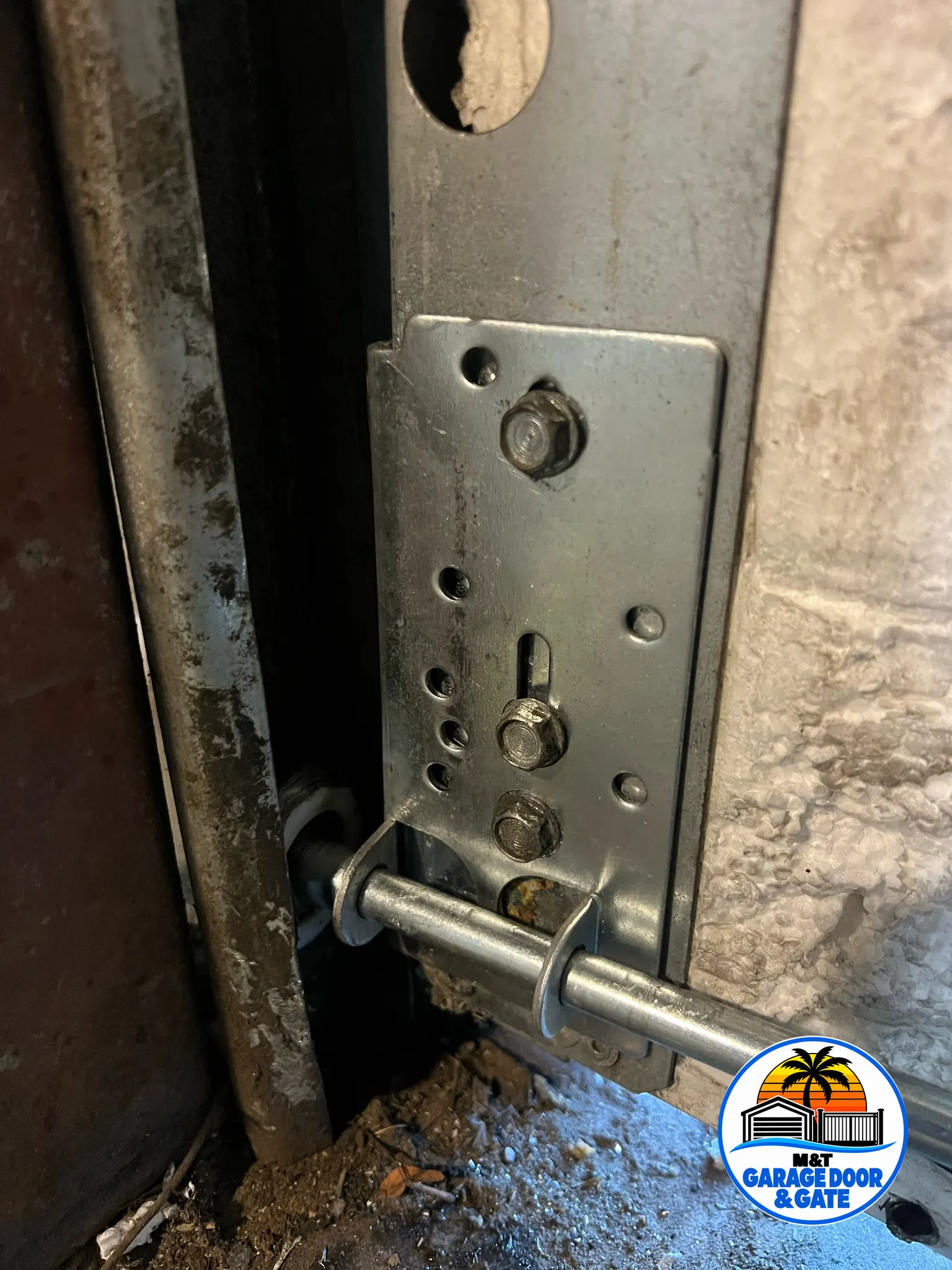
Water, flooding and the bottom of the door
During Hurricane Helene, in September 2024, water rose to record levels along the coast from Clearwater southward. Where water stands in a garage, it rusts the bottom brackets, the lowest rollers and the cable ends, and it can soak the safety sensors and the wall button wiring.
We check every part the water touched, change rusted rollers and a torn or soaked bottom seal, and test the sensors. A bottom bracket rusted thin is a bracket and cable repair, not a cleanup job.
We repair storm damage across Tampa Bay, from Clearwater, St. Petersburg and Largo in Pinellas to Gibsonton, Palm River-Clair Mel and Progress Village in Hillsborough.
Storm repair, hurricane prep and honest limits
Checks before the season and the door's wind bracing are covered on our hurricane garage door repair page, and the hurricane season checklist lists what to look at before a storm. Replacing a whole door requires a building permit from the local building department. Our work is repair only, and we are straightforward when a door has gone past that point.
How a visit goes
- Look before it movesWe check cables, rollers, tracks and hinges with the door still, so hidden damage does not get worse.
- Make it safeA door out of its tracks or on a slack cable is clamped and lowered under control.
- Repair tracks, cables and openerWe straighten or change bent track, re-seat cables, change cracked hinges and repair a surge-hit opener.
- Test and sealWe cycle the door several times, test the auto-reverse and check that rain can't get under the bottom edge.