

What each garage door seal does
Most garage doors have three kinds of seal. At the floor sits the bottom seal: a strip of rubber or vinyl held in a channel, called the retainer, along the bottom edge of the door. When the door closes, the strip squashes against the slab and fills the small dips in the concrete.
The side and top seals, often called stops, are vinyl flaps fastened to the wood or composite frame around the opening. They lean against the face of the door when it is down. Together these seals block wind-driven rain, keep out leaves and grass clippings, and close the gaps that ants, roaches, lizards and mice use to get in.
None of them carries any of the door's weight. That makes a seal the one door part where a worn piece is a nuisance rather than a danger, and the one part you can look over yourself without risk.
Why heat, sun and rain wear seals out
Rubber and vinyl dry out in strong sun. A bottom seal that started soft and round goes flat and hard, then cracks where it folds against the floor. On a garage that faces west, the side stops can curl away from the door and leave a gap you can slide a finger into.
Water does its own damage. Rain that blows under the door leaves the seal sitting wet, and the bottom edge of a steel door or its aluminum retainer can corrode along the floor. Once the retainer channel pinches or splits, a seal will not stay in it, and the rubber creeps out at the ends.
Near the water, in places like Clearwater and Largo, salt air speeds that corrosion up. Inland, in Brandon or Wesley Chapel, heat and humidity do most of the harm, along with the grit that summer storms wash across the driveway.
How to tell a weather seal has failed
Check from inside on a sunny afternoon, with the door closed and the garage lights off. Then look for these:
- Daylight under the closed door, at the corners or along the middle
- A wet line on the floor inside after rain
- Leaves, sand or dead bugs piled just inside the door
- Rubber that is cracked, torn or stays flat when you press it
- A seal hanging out of its channel at one end
- Side stops that no longer touch the door
Light on one side only often points to the door, not the seal. A stretched lift cable or a slipped cable drum can leave one end of the bottom edge higher than the other, and a fresh seal will not hide that for long.
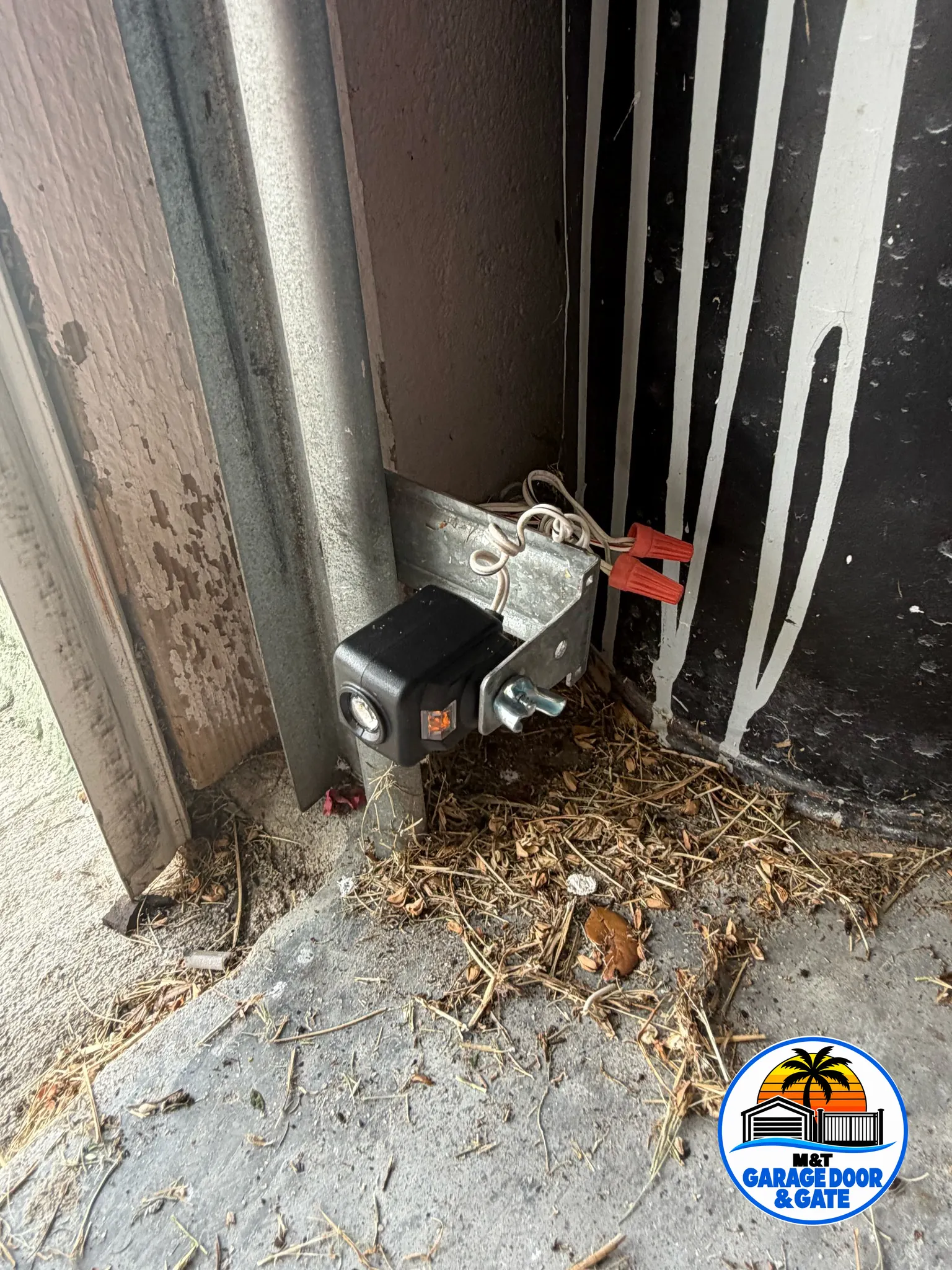
Look at the safety sensors near the floor as well. Leaves and grit that blow in under a worn seal tend to collect around them, and a sensor half buried in debris can stop the door from closing.
What we do on a weather seal visit
We start with the retainer. Bottom seals come in several shapes, such as T-end, bulb and J-type, and each one fits only the channel made for it. If the retainer is sound, we slide in a matching seal and trim it to the width of the door. If the retainer is bent, split or rusted through, we change it along with the seal.
Wood doors and some older steel doors have no retainer, so their seal is fastened straight to the bottom edge. Those get a seal fixed the same way. For the sides and top, we fit vinyl stops to the frame so each flap rests on the door with light, even contact. Too tight, and the door drags and the opener strains; too loose, and the gap stays.
Then we check the door itself: the level of the bottom edge, the cables and the opener's close setting. A door that stops short or sits crooked leaves a gap no seal can close. When the door needs more than seals, a tune-up covers springs, rollers and the opener on the same visit.
Seals, storms and hurricane season
A storm can tear a bottom seal or pull a stop off the frame, especially when wind pushes the door inward. If the door also runs badly afterward, our storm damage repair page explains what else to look at. Before the season, a sound seal is part of a hurricane prep check: it keeps rain out, while the door's wind bracing is what holds the door in place.
You can check the seals yourself between visits. Our maintenance checklist and the hurricane season checklist show what to look at and when. Leave the bottom brackets alone, though: they sit right where the seal ends, and they hold the lift cables under heavy tension.
We fit garage door seals across Tampa Bay, from Temple Terrace to Gibsonton on the bay.
How a visit goes
- Look for the gapsWe close the door, check where daylight, water and debris come in, and test how the rubber feels.
- Match the profileWe identify the seal and retainer shape so the fresh rubber fits the channel on your door.
- Fit seals and stopsFresh rubber goes into the retainer, and vinyl stops go on the frame where the old ones curled, each with even contact.
- Set the close and testWe set how far the door closes so the seal squashes evenly, then check that the door still reverses when it meets an obstacle.