

What makes a door reverse instead of close
A garage door opener is built to give up easily while closing. If anything tells it the path is not clear, it stops and runs back up, because a closing door is heavy enough to hurt someone. So when your garage door won’t close, the opener has usually been fed bad information rather than failed.
That information comes from three places. A pair of photo eyes, small safety sensors near the floor on each side track, send an invisible beam across the opening. The opener also feels for resistance as the door travels, and it stops at a programmed point called the close limit. A fault in any of the three looks the same from the driveway: the door starts down, then changes its mind.
The pattern tells you a lot. A door that reverses before it moves at all points to the sensors. One that touches the floor and bounces back points to the limit or force settings. A door that stops partway with a groan, or sits crooked, points to the tracks, rollers or springs.
Photo eyes, low sun and the other usual causes
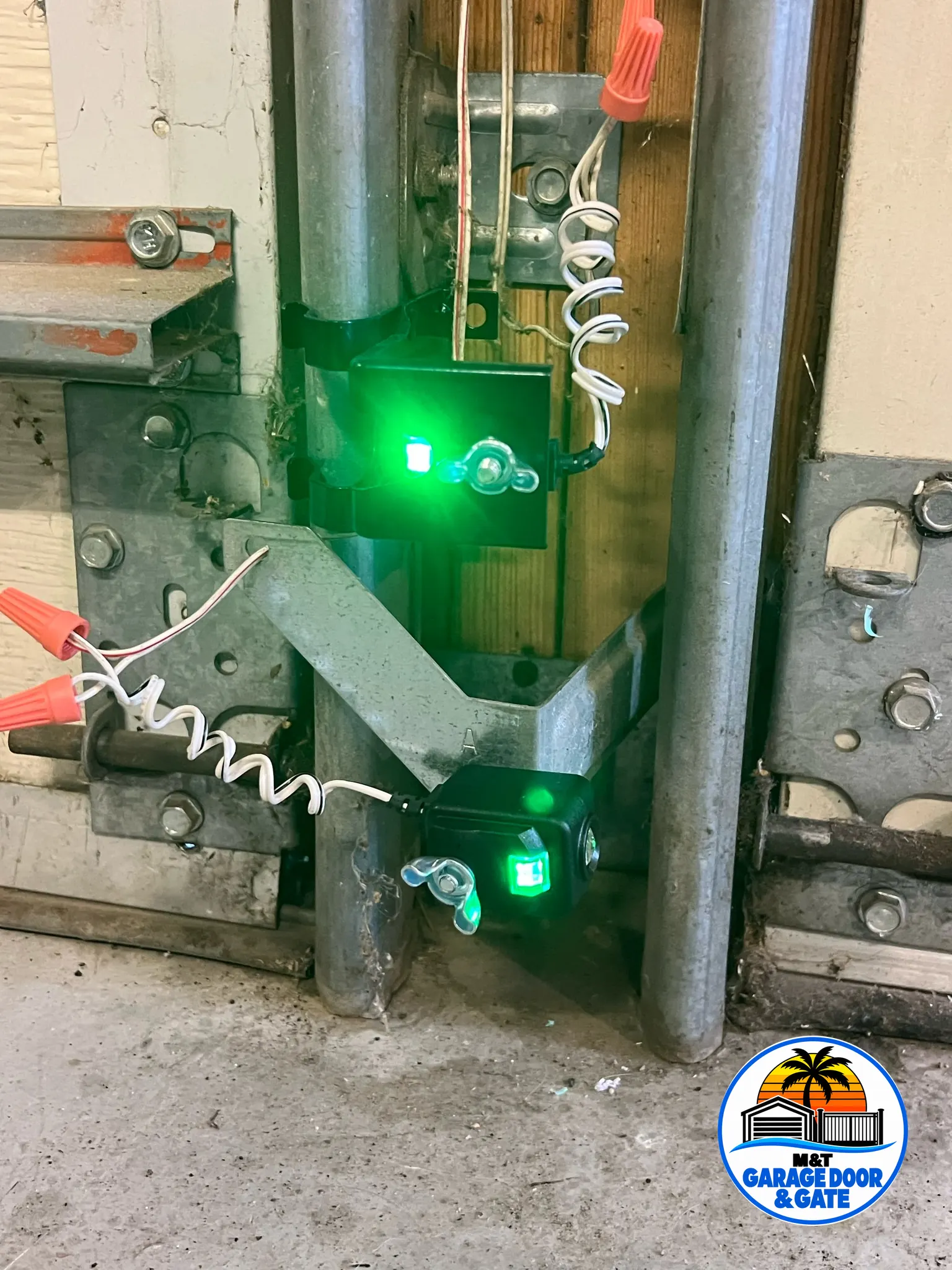
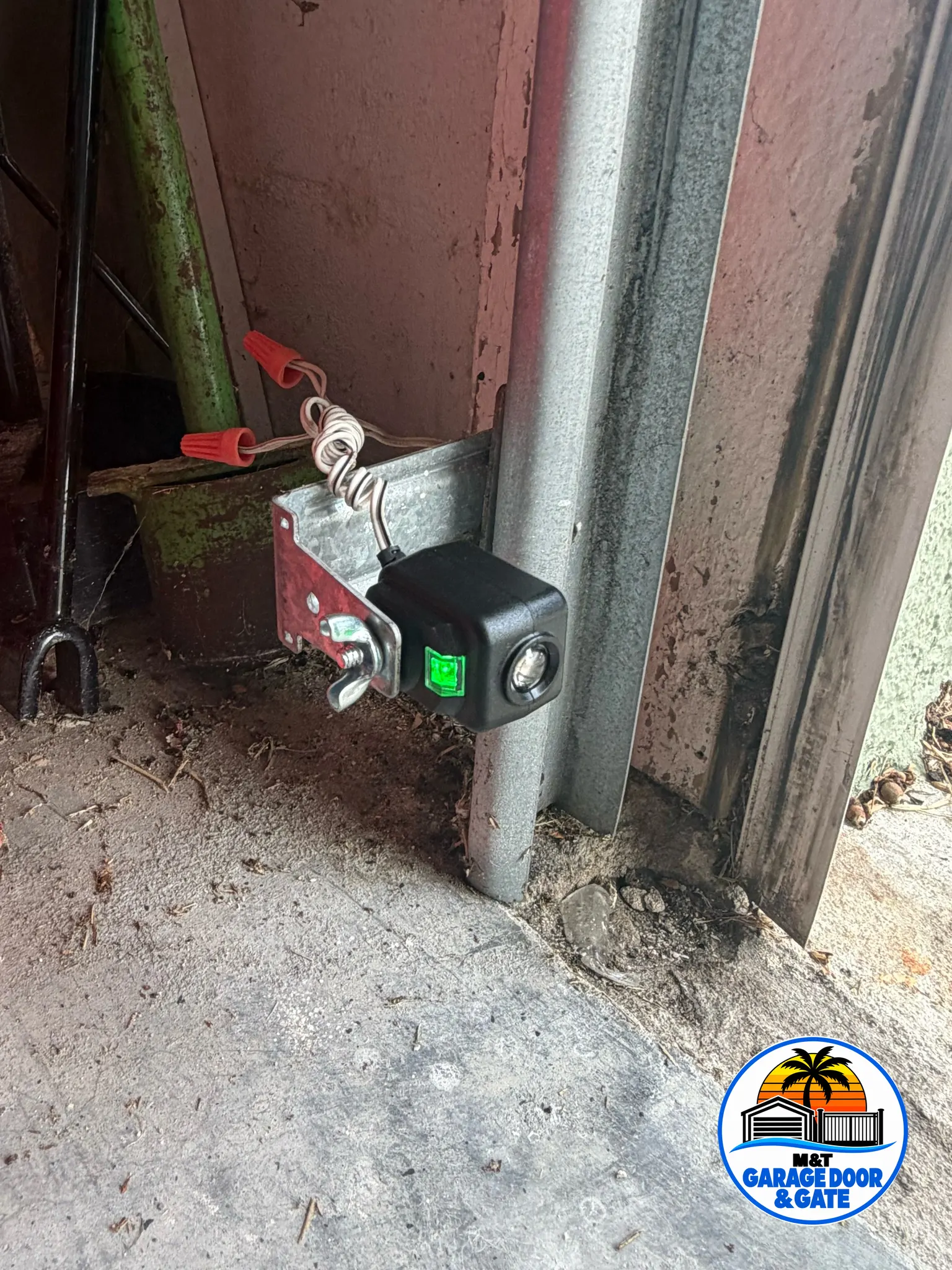
Blocked or misaligned photo eyes are the most common cause. A rake handle, a recycling bin, leaves blown against the track or a spider web across a lens can break the beam. So can a bracket knocked out of line by a bumper or a bike. Each sensor has a small light: on most openers a steady glow on both means they see each other, while a dark or blinking light means they don’t.
Sun glare is a Tampa Bay classic. On a door that faces east or west, low morning or late-afternoon sun can shine straight into the receiving sensor and blind it. The door then refuses to close at the same time on clear days and behaves once the sun moves on. Shading the lens, or moving the receiving eye to the shady side of the opening, usually ends it.
Other causes are less obvious. The close limit may have drifted, so the opener thinks the floor is higher than it is. The force setting may have become too touchy after a spring weakened and the door got heavier. The wall control’s lock button may be on, which blocks every remote, or a remote battery may be fading.
Safe checks to try first
These need no tools and keep your hands away from springs and cables.
- Clear the beam. Move anything near the bottom of the tracks and wipe both sensor lenses with a soft dry cloth.
- Read the sensor lights. If one is dark or blinking, look along the track for a bracket that has been bumped. Nudging it back by hand is fine; leave the wires alone.
- Shade the sun. If the trouble comes at the same hour on bright days, hold a piece of cardboard over the receiving eye and try again.
- Check the wall control. A lock or vacation light means remotes are blocked. Press that button again; the opener’s manual shows which one it is.
- Hold the wall button down. On many openers, holding the wall button until the door reaches the floor closes it even with a sensor fault. Watch the door all the way down, and use this only to secure the house until the sensors are fixed.
- Look at the door itself. If it hangs crooked, a roller has left the track or a cable looks slack, stop running it.
When the track, a spring or the opener needs repair
Some causes need a repair visit: sensor wires chewed by pests or pinched under a staple, a cracked sensor housing, or a logic board that no longer reads the sensors. All of these are part of garage door opener repair, and we sort them out on site.
A door that binds, scrapes or tilts is a different job. Rollers that have popped out, a track bent by a car bumper or a storm, or a cable that jumped off its drum can all stop a door short of the floor. That is off-track repair, and the door should stay where it is until then, because a door out of its track can fall.
A weak or broken spring makes the door heavier, and the opener reads the extra weight as an obstruction. Turning the force setting up hides that problem and wears out the opener. If the door also feels heavy, or there was a sharp bang in the garage earlier, read how to tell a spring broke before you try the door again.
What to leave alone while the door misbehaves
Never tape the sensors together, aim them at each other on one side, or unplug them to get the door down. With the beam defeated, a door coming down has no way to notice a child, a pet or a car in its path. The force and travel adjustments on the motor are a job for us as well, since a guess can leave the door pressing hard on whatever is under it.
Springs, cables, the bottom brackets where the cables attach, and the track bolts hold stored energy or the door’s weight. If the problem points there, leave the door in place, keep everyone clear of the doorway, and book a visit or call (813) 836-7187. Our technician checks every moving part, not just the one that quit, and explains what turned up.