

How hurricane wind attacks a garage door
A garage door is the widest opening in most houses, made of thin panels joined by hinges. Hurricane wind pushes hard on its face, then pulls on it as gusts swirl around the house. The door flexes inward, and if it bows far enough, the rollers pull out of the tracks and the door gives way.
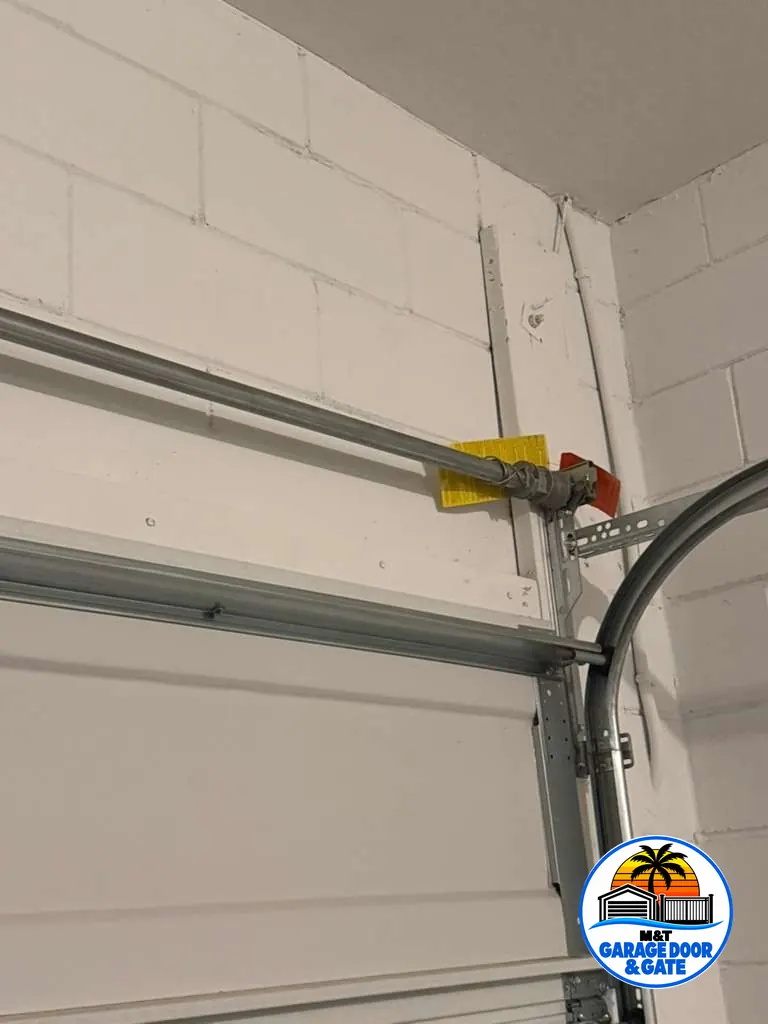
Once the door fails, wind rushes into the garage and pushes up on the roof from inside. The garage door is part of what keeps the wind out of the whole house, which is why wind-rated doors here carry horizontal steel struts and heavier track brackets.
Debris is the second threat. Branches, roof tiles and patio furniture driven by the wind dent the panels or punch through them, and a dent in the wrong spot can bend a strut or crack a hinge.
Tampa Bay wind rules in plain terms
The Florida Building Code, 8th edition (2023), uses the ASCE 7-22 wind maps. For most homes (Risk Category II), anywhere with a design wind speed of 140 mph or more is in the wind-borne debris region, where doors must resist flying debris or be protected from it.
Pinellas County sets 145 mph countywide, so every home in St. Petersburg, Clearwater and Largo is inside that region. In Hillsborough the 140 mph line crosses the county: Town 'n' Country, Riverview and Gibsonton sit inside it, Brandon sits just outside, and Plant City lies farther east. Addresses near the line differ, and our wind rules answer explains how to read yours.
For a repair, one rule matters most: a door's wind rating depends on all its parts working together. When we fix a spring, cable, hinge or track on a wind-rated door, every strut, bracket and fastener goes back the way the door was built. If the door has a wind-rating label, leave it in place.
A hurricane prep check before the season
The Atlantic hurricane season runs from June 1 through November 30. Early in the season, or while a forecast storm is still days away, we go over the parts that hold the door in its opening:
- Struts: each one present, straight and bolted tight at both ends
- Hinges and roller brackets: snug, with no cracks around the bolt holes
- Tracks: straight and plumb, with every bracket firm against the wall
- Springs and cables: no coils thinned by rust and no frayed strands
- Rollers: seated deep in the tracks, not worn flat or wobbling
- Bottom seal: whole, so wind-driven rain stays out
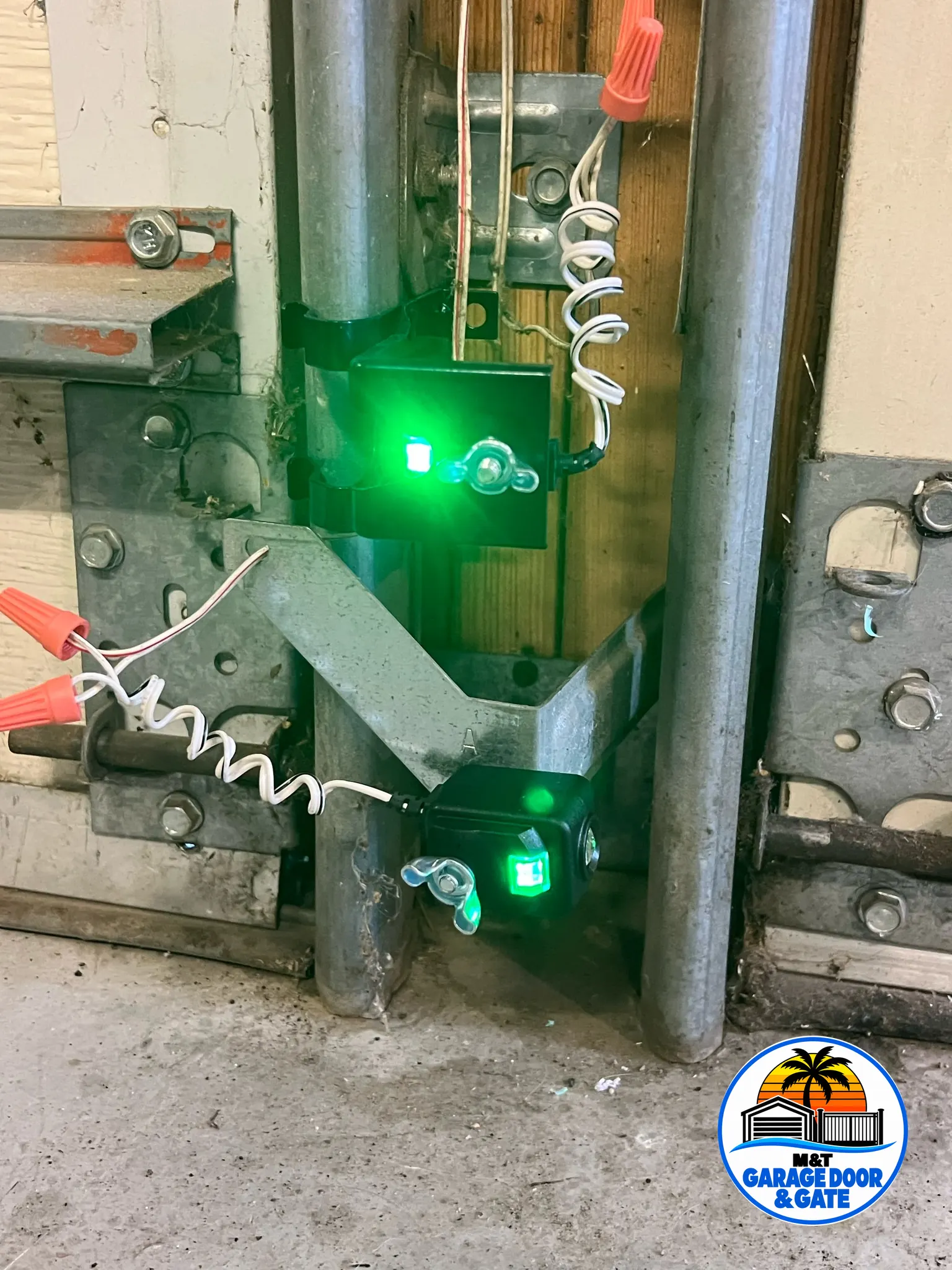
- Opener: the safety reverse, the manual release and any battery backup
We tighten, align and repair what we find. A cracked hinge, a frayed cable or a roller riding shallow in its track is the kind of weak point that lets go under wind load, and each one is ordinary repair work. A torn bottom seal is a weather seal repair we can handle on the same visit, and our hurricane season checklist covers what you can look at yourself.
When a hurricane is in the forecast
Keep the door closed from the first rain bands until the storm has passed. A door left partly open catches the wind and can be torn from its tracks.
Unplug the opener before the storm reaches you. Power often flickers and surges as lines fail and come back, and that is a common way opener logic boards die. If the door has a slide lock, engage it once the opener is unplugged, and release it before you plug the opener back in.
Practice the red emergency release with the door closed, so you can lift the door by hand if the power stays out. With sound springs, a balanced door lifts with modest effort. If it feels like dead weight, a spring has broken and the door should stay down.
After the storm: wind damage we repair
Look before you press the button. A door that was pushed in can look normal and still have rollers half out of a track, a cracked hinge or a cable off its drum. Running it with the opener can finish what the wind started.
We repair bent and twisted tracks, rollers pulled out of their tracks, cracked hinges and strut brackets, frayed or slipped cables, broken springs, and openers killed by a surge. Track repair covers the track work in detail, and storm damage repair covers doors forced out of their tracks or hit by debris in any storm.
Some doors are past repair, such as a door with a panel folded across its width or torn open by debris. A full door replacement needs a building permit, and the door that goes in has to meet the wind rules for that address. We only repair existing doors, so we make a door like that as safe and secure as it allows and tell you plainly.
How a visit goes
- Walk around firstWe look at the door inside and out before it moves, so a hidden break does not get worse.
- Secure and lowerIf rollers are out or a cable is slack, we clamp the door and bring it down under control.
- Repair and keep the bracingWe repair tracks, hinges, cables and springs, and refit every strut and bracket as the door was built.
- Run, balance and sealWe run the door, check its balance and the auto-reverse, and make sure the bottom seal meets the floor.