

What rollers and hinges do
Each section of a garage door rides on a pair of rollers, one at each edge, that roll inside the side tracks. The rollers in the middle of the door sit in the hinges that join one section to the next, while the top and bottom rollers sit in brackets at the corners.
The hinges bend as the door curves from the wall to the ceiling. On most home doors they are numbered, and the number climbs toward the top so each roller sits a little farther out from the door. That stagger lets the door press snug against the trim on the frame when it closes. Put a hinge in the wrong spot and the door rubs or leaves a gap.
Signs of worn rollers or cracked hinges
Rollers and hinges rarely fail all at once. They wear a little with every trip, and the signs build up:
- A grinding or squealing sound as the door moves, loudest where the track curves.
- Rollers that wobble on their stems, or wheels with flat spots, chips or cracks.
- Steel rollers with loose or missing ball bearings, or rust packed into them.
- A door that jerks, shakes or shudders instead of gliding.
- A hinge cracked at the knuckle, or screws working loose from the door skin around it.
- Gaps opening between sections as the door travels, or a roller scraping the edge of the track.
None of these is an emergency on its own, but each one puts extra load on the opener and the springs. Our list of warning signs worth a call covers the rest of the door.
Steel, nylon and the salt air
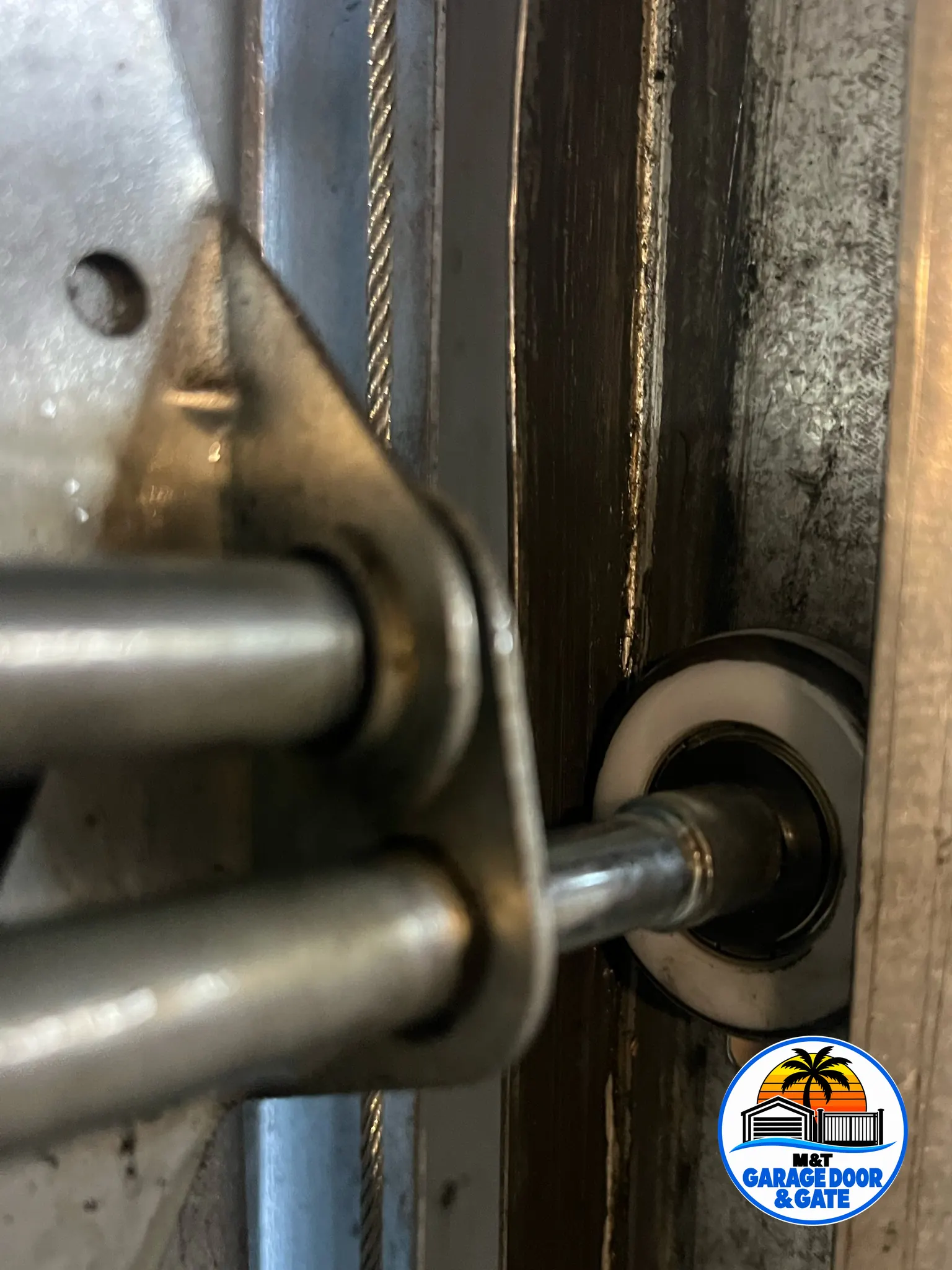
Rollers come in a few kinds. Plain steel rollers with no bearings are the most basic and the loudest. Steel rollers with ball bearings last longer but rust in humid air, and once the bearings seize, the wheel slides instead of turning. Nylon wheels on sealed bearings run quietly, and the nylon itself cannot rust, which suits homes near the bay and the Gulf.
Hinges are galvanized steel, and salt air works on them too, first at the knuckle where the pin turns. A cracked hinge lets the joint between two sections flex, which strains the rollers on both sides of it.
Rollers and hinges also wear out sooner when the door is out of balance or the track is out of line, so the springs and rails get checked at the same visit. If the rollers have already climbed out, that calls for off-track repair; a bent rail needs track repair.
Replacing rollers and hinges safely
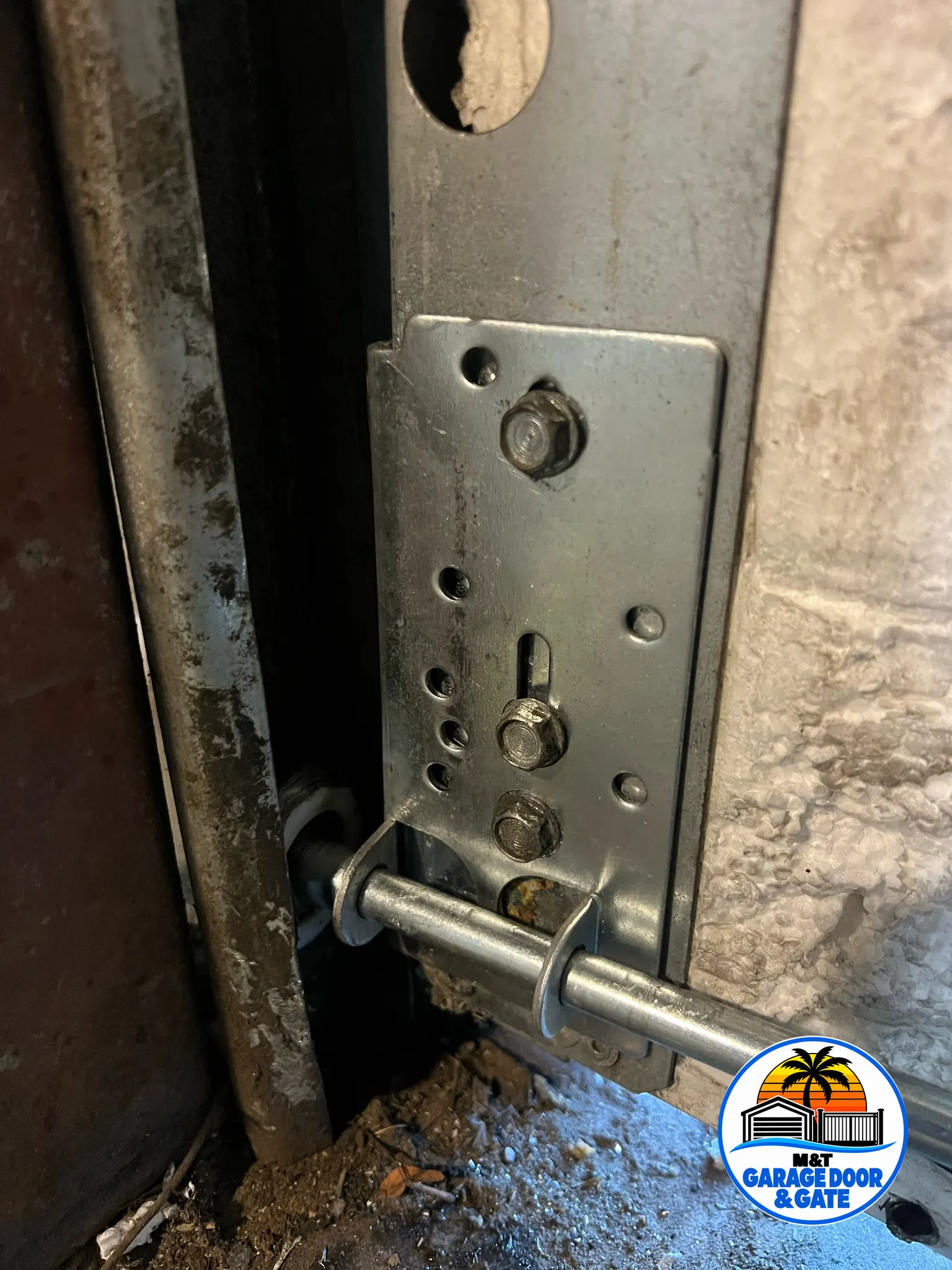
Middle rollers and hinges are changed with the door closed, one joint at a time, so the door is never left loose. The bottom rollers are a different job. They sit in the bottom brackets, and the lift cable pulls on those brackets with the full force of the springs, so they are changed only after the spring tension is let off. Leave the bottom brackets alone.
Once the new parts are on, each roller is checked for clearance in the track, the hinge screws are snugged, and the hinge pins and steel bearings get a light spray of garage door lubricant. The door is balanced and run until it travels without a catch. A yearly tune-up keeps it that way, and the garage door maintenance checklist covers what to watch for in between.
Roller and hinge repair across Tampa Bay
We replace rollers and hinges in Temple Terrace, Brandon, Valrico and East Lake-Orient Park in Hillsborough County, and in Largo and Clearwater in Pinellas, where salt air makes sealed nylon rollers worth asking about.
How a visit goes
- Watch the door runThe door makes a few trips while each roller and hinge is checked for wobble, cracks and rubbing.
- Middle joints firstMiddle rollers and hinges are changed one at a time with the door down.
- Bottom corners with tension offThe bottom rollers are changed only after the springs are unwound, and the tension goes back on afterward.
- Lube, balance, testHinge pins and bearings get a light lube, then the springs are balanced and the opener is tested.