

How to open a garage door without power
Every automatic opener has a manual release, normally a red cord with a handle that dangles from the trolley on the rail. One pull disconnects door and motor, so you can move the door yourself. The springs keep doing their work, so a healthy door should feel light enough for one adult to raise. That is the whole trick to open a garage door without power.
Check two things first. The door must be fully shut, because a door released while open can come crashing down if a spring is weak or broken. The springs above the door must also be whole. A coiled spring over the opening that has split into two pieces, or a side spring hanging loose, means the door is too heavy to lift safely.
Then give the cord one firm pull downward until you feel the carriage let go. Lift the door from the handle or the bottom edge, bending your knees, and raise it all the way so it stays open on its own. If it fights you, or slides back down when you ease off, guide it to the floor and leave it shut.
Keeping the door secure while the opener is off
A disconnected door is not locked. Anyone who gets fingers under the bottom edge can lift it from outside, and the opener cannot hold it down. If you leave the house, close the door and use the slide lock on the inside if your door has one.
Some garages also have a keyed release on the outside, above the door, for getting in when the power is out. Not every home has one, and on many houses the only way in is through another door.
Keep children away from the cord and the moving door, and never let anyone stand under a door that is partly raised. A door lifted by hand can creep back down if it is not all the way up, or if the springs have grown tired.
Reconnecting the opener when power returns
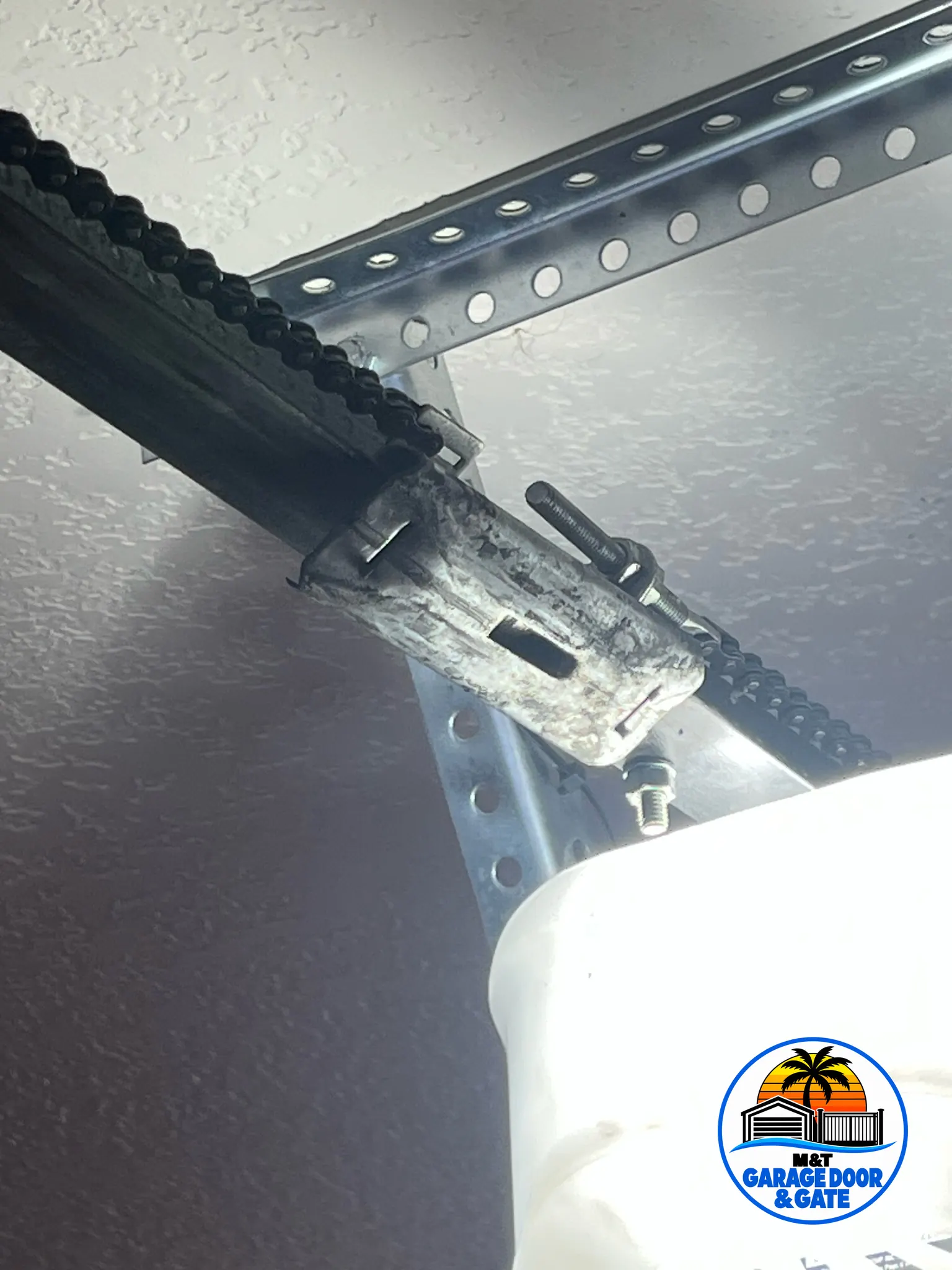
Once the lights are back, lower the door by hand first. On most chain and belt openers, the next run of the motor lets the carriage catch the trolley and lock back on with a click. Some models want the release cord pulled toward the door, or a lever set, before they reconnect, and the instructions for your model say which. The model number is printed on a label on the motor housing.
Then run the door through a full open and close, and test the safety reverse. If you hear the motor and the door stays still, the trolley has not hooked back on. If nothing happens at all, check the breaker and the ceiling outlet the opener plugs into; a GFCI outlet may need its reset button pressed.
Remotes and keypads usually keep their codes through an outage. If one stops responding afterward, try a fresh battery, then pair it again. Remote and keypad programming covers what we do when that does not work.
Battery backup openers
Many recent openers include a battery backup that keeps the door moving for a handful of cycles while the grid is down. While on battery, the opener usually beeps or flashes to tell you so, and it may move the door more slowly. That is normal.
Backup batteries wear out after a few years even if they are rarely used. A unit that chirps every so often with the power on is usually asking for a fresh battery. Before storm season, pull the opener’s plug and try the door on battery alone, then plug it back in. Our hurricane season checklist has the rest of the pre-storm list.
When the opener does not come back
Sometimes an opener stays silent after the outage, or answers the wall button but ignores the remotes. An opener dead after a power surge often has a damaged logic board, which is a repair, not a reason to give up on the whole unit. A burned smell, a dark opener light while the outlet has power, or a click with no motor sound are all worth mentioning when you call (813) 836-7187.
Garage door opener repair covers boards, gears and travel limits. When an opener is past fixing, we swap it for a plug-in unit on your existing ceiling outlet. A frayed release cord or a snapped handle is worth mentioning too: it is a small part, but you will want it in the next outage. You can also line up a visit online.