Commercial Roll-Up Doors
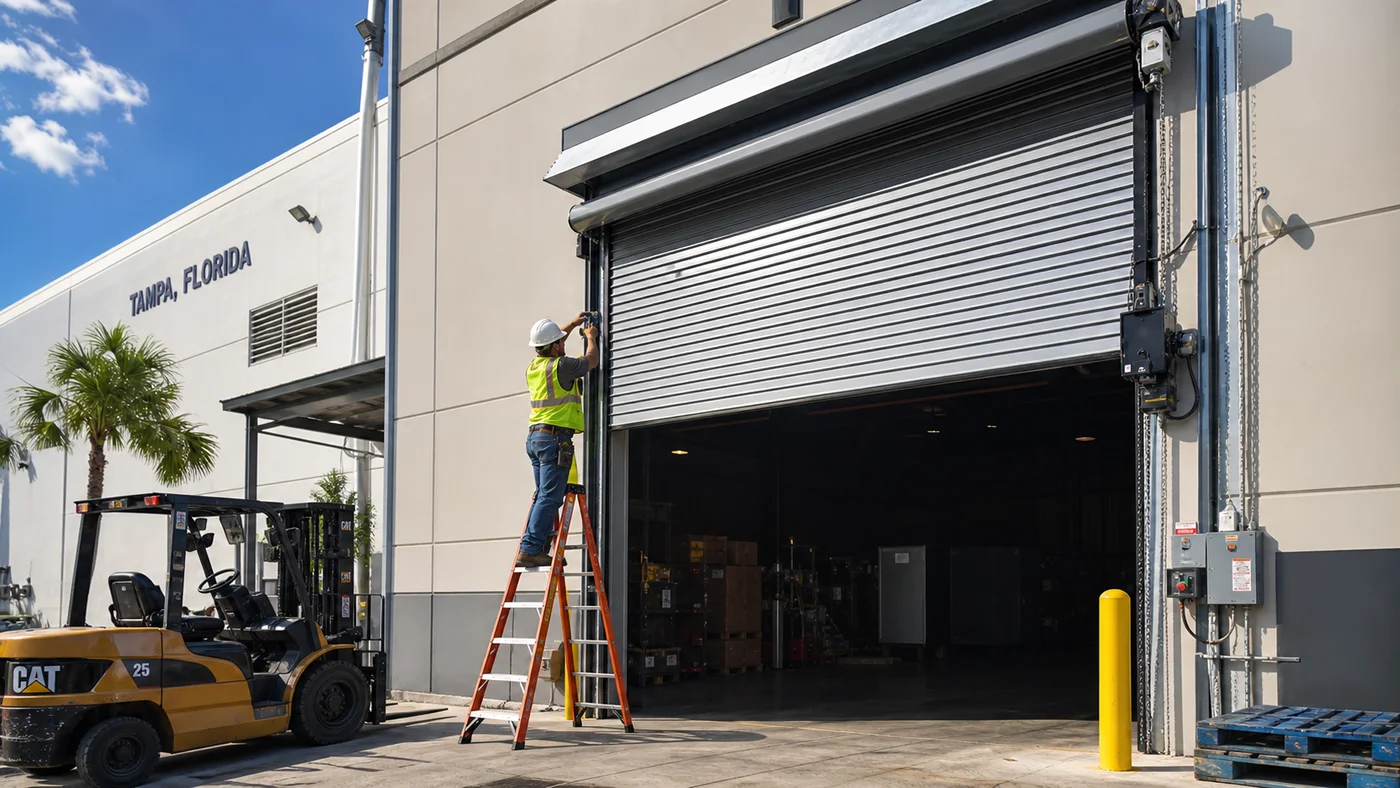
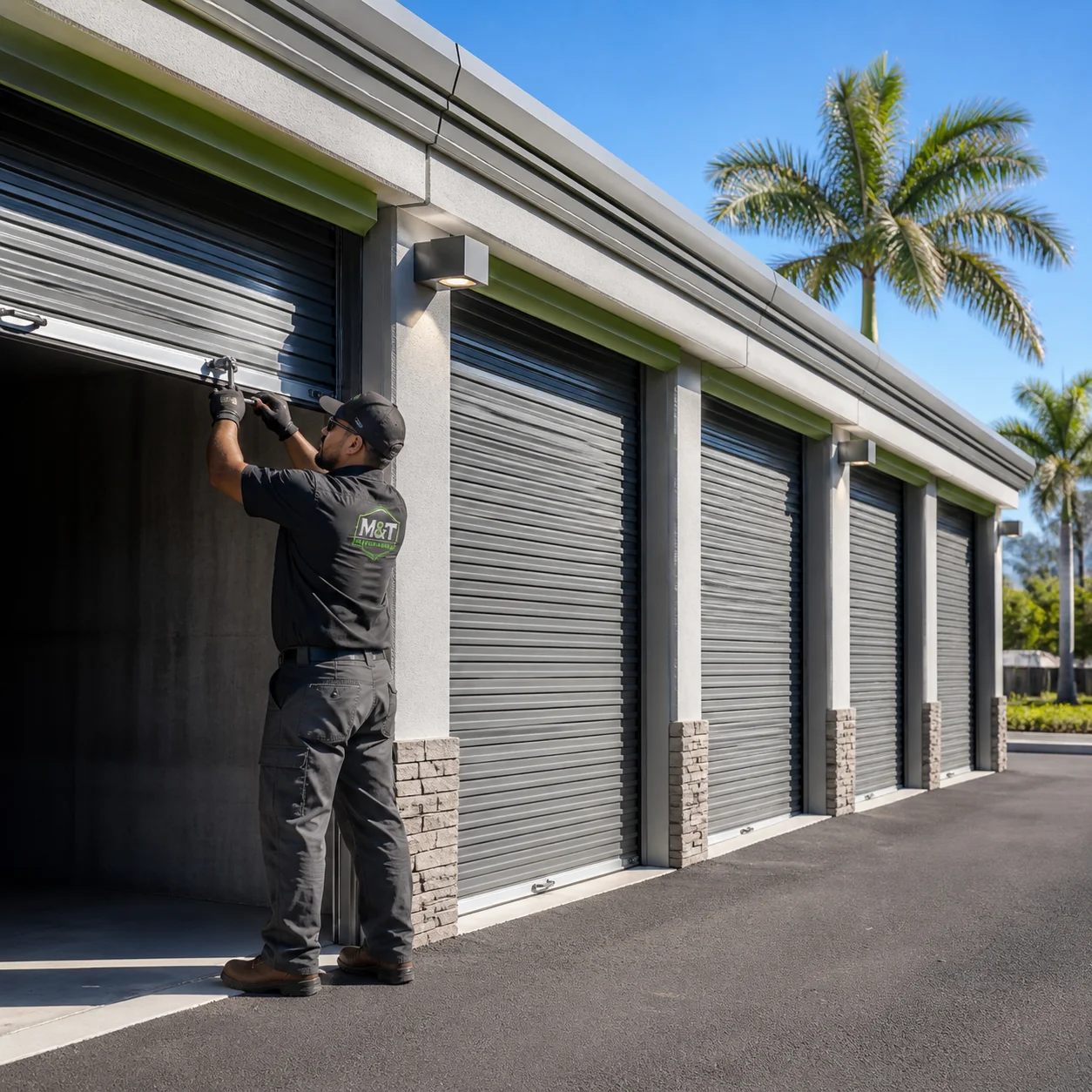
M&T provides commercial roll-up door installation and repair across Tampa Bay for warehouses, retail storefronts, self-storage facilities, industrial buildings, and security applications. Service-grade and heavy-duty roll-up doors from leading commercial manufacturers, sized to your opening, traffic frequency, and security requirements. Free on-site assessment with written quotes for property managers and business owners.
Commercial Roll-Up Doors
Commercial roll-up doors solve specific space, security, and operational challenges that sectional commercial doors can’t. Whether you’re managing a warehouse with constant truck traffic, a self-storage facility with hundreds of unit doors, a retail property needing security shutters, or an industrial building with limited overhead clearance, the right roll-up door specification matters for both operational reliability and long-term cost.
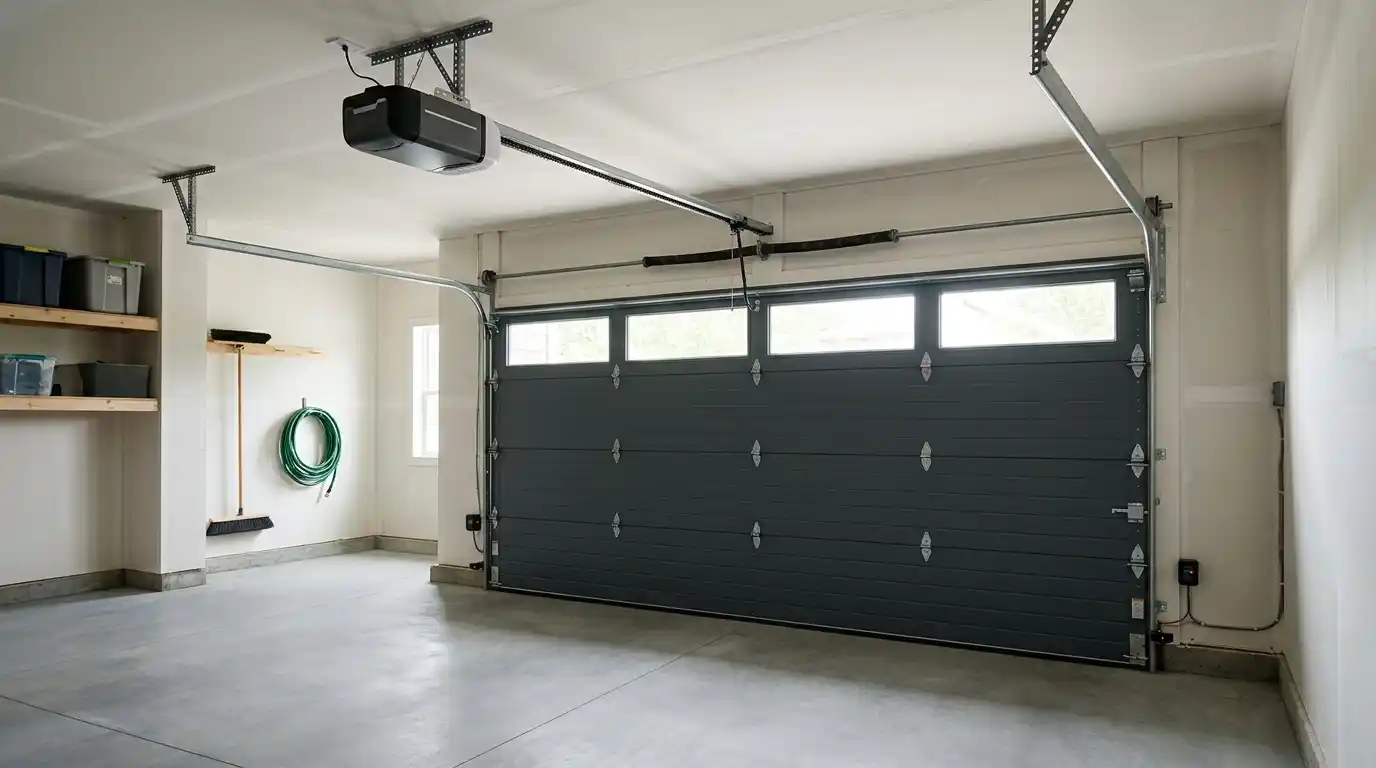
A commercial roll-up door (also called rolling steel door or rolling service door) is a single-piece curtain made of interlocking horizontal slats that coils into an overhead drum when opened. Unlike sectional doors that have multiple panels and overhead tracks, roll-up doors take up minimal headroom and ceiling space, making them ideal for spaces with limited overhead clearance or applications requiring maximum interior height.
Door Configurations
The first decision in commercial roll-up door specification is grade level. Three primary tiers serve distinct commercial applications, and choosing the right grade for your traffic frequency is the single most important factor in long-term reliability.
Light-duty roll-up doors designed for low-frequency use (under 10 cycles per day). Typically 22 to 24 gauge steel, single-spring assembly, manual chain hoist or light operator.
Self-storage units, small retail back rooms, residential outbuildings, light commercial spaces. Budget-conscious projects with low-traffic applications.
Mid-grade polyurethane or dense polystyrene in 1.75 to 2 inch panels. The sweet spot for most Tampa homes with attached garages. Good thermal performance, solid sound dampening, reasonable price point.
Heavy-duty roll-up doors designed for high-frequency use (30+ cycles per day) and demanding environments. 18 to 20 gauge steel, heavy-duty multi-spring assembly, commercial-grade operators.
Distribution warehouses, manufacturing facilities, large industrial buildings, security installations, hurricane-rated applications.
Materials
Material selection is the second key decision after grade. Different materials handle different commercial environments, and Tampa Bay’s specific climate factors (humidity, salt air, hurricane wind loads) make some materials significantly better long-term investments than others.
The most common commercial roll-up material. Galvanized steel slats with powder-coat or pre-finished surface treatment. Available in multiple gauges (18 to 24) for different durability needs. Cost-effective, paintable, broadly available, and well-suited to most non-coastal Tampa commercial applications.
Premium commercial material for corrosion-prone environments. Used in food processing, coastal facilities, marine applications, and high-end retail. Higher cost (2 to 3x galvanized) but significantly longer service life in corrosive environments. Worth the premium for coastal Tampa Bay commercial properties.
Lightweight commercial option for applications prioritizing operating speed and low operator demand. Common in self-storage and high-cycle retail. Less impact-resistant than steel but easier to operate and longer-lasting in salt-air conditions. Reduces operator load, extending opera
Foam-insulated steel slats providing R-values of 7 to 12 for climate-controlled commercial environments. Common applications: refrigerated warehouses, climate-controlled storage, manufacturing with HVAC requirements. Tampa Bay benefits from insulated commercial doors due to extreme summer heat. Cooling cost reductions justify the premium within 3 to 5 years.
Common Repair Scenarios
Commercial roll-up doors fail differently than residential garage doors due to higher cycle counts, heavier components, and more demanding operating environments. Here are the six most common commercial repair scenarios we handle in Tampa Bay.
The most common commercial roll-up repair. Heavy-duty torsion springs experience repeated cycles and eventually break, leaving the door inoperable. Commercial doors typically have multi-spring assemblies distributing load across 2 to 6 springs. Replacement requires properly-rated commercial springs and proper tensioning.
Forklift and truck impact damage is common in active warehouse environments. Individual slats can be replaced when damage is localized; extensive damage may require full curtain replacement. Slat replacement is more cost-effective than residential panel replacement because slats are individual interlocking components.
Commercial roll-up operators are heavier-duty than residential opener-style operators. Common failures: control board, capacitor, motor, or chain/sprocket assembly. Most failures are repairable; full operator replacement makes sense for older operators (10+ years) with multiple failures.
Commercial roll-up doors can come off their guide channels or have curtain misalignment from impact, wear, or improper operation. Repair requires re-tensioning, re-tracking, and often replacement of damaged guide hardware. Often urgent because off-track doors can’t be safely operated and leave commercial properties unsecured.
The bottom bar takes the most impact from forklifts, vehicles, and routine wear. Damage to the bottom bar or astragal seal affects door sealing, security, and operation. Replacement is straightforward and prevents larger curtain damage from cascading wear.
Commercial roll-up doors have substantial hardware (drum brackets, end plates, drive sprockets, chain hoists). Hardware failures from age, corrosion, or impact require specialized commercial replacement parts. Salt-air environments accelerate hardware failures in coastal Tampa Bay locations.
Schedule Free Assessment
Commercial roll-up door projects start with proper specification, and proper specification starts with an on-site assessment. We come to your warehouse, retail property, self-storage facility, or industrial building, evaluate your specific needs, and provide a written commercial quote. No charge for the assessment, and no obligation to proceed.
Why M&T
Year-round humidity attacks galvanized hardware, springs, and operator components. Commercial doors in Tampa typically need maintenance 30 to 50% more frequently than doors in dry climates.
Tampa Bay coastal commercial properties (Port Tampa, Ybor industrial, MacDill area, Gibsonton/Apollo Beach industrial) face accelerated corrosion. Stainless or aluminum may justify the higher upfront cost in these locations.
Florida wind code requires hurricane-rated commercial doors in many Tampa zones. Standard commercial doors often don't meet code for new construction or major renovations.
Tampa commercial buildings see 110°F+ inside non-climate-controlled warehouses, stressing operator electronics and seal materials.
Active Tampa distribution centers can cycle doors 50 to 200+ times per day, requiring heavy-duty grade beyond standard commercial.
Installation Process
Commercial roll-up door installations are larger projects than residential garage door installations. Here’s how the typical commercial project flows from initial contact through final handoff.
On-site evaluation of garage configuration (attached vs detached, shared walls, rooms above), measure current door, recommend appropriate R-value tier. No charge. 30 to 45 minutes.
Recommend grade, material, gauge, operator, access control. Written commercial quote covering door, operator, electrical, permits, labor, warranty.
Hillsborough County or City of Tampa commercial permits with structural calculations. 5 to 15 business days typical processing.
Door installation with structural anchoring, operator install, electrical connection, safety devices, access control programming. 1 to 3 days on-site.
County final inspection, multi-cycle testing, staff training on operation and basic maintenance, written warranty documentation.
Where We Work
We dispatch daily from our Tampa office at 5103 W Knox St with same-day availability across the region. Find your neighborhood below, or see every community we cover on our service areas page.
Fastest response typically within an hour
Town ‘N’ Country, Carrollwood, Westchase, Citrus Park, South Tampa, Hyde Park, Davis Islands, Gibsonton, Palm River-Clair Mel
Largest service area outside central Tampa
Brandon, Riverview, Valrico, Bloomingdale, Fish Hawk, Apollo Beach, Egypt Lake-Leto, University Area, East Lake-Orient Park
North Hillsborough & Pasco County
Lutz, Land O’ Lakes, New Tampa, Temple Terrace, Wesley Chapel, Tampa Palms, Progress Village
FAQs
Commercial roll-up doors in Tampa typically run $2,500 to $20,000+ depending on grade, size, and features. Service-grade doors for self-storage and light commercial start around $2,500 to $4,500. Standard commercial runs $4,500 to $8,500. Heavy-duty industrial runs $8,500 to $15,000. Insulated and hurricane-rated commercial options range higher. All installations include door, operator, electrical work, permits, and warranty.
Roll-up doors are single-piece curtains of interlocking slats that coil overhead into a drum. Sectional doors have multiple horizontal panels that travel along overhead tracks. Roll-up doors take less ceiling space (better for limited clearance), provide better security in solid-steel configurations, and operate faster on average. Sectional doors offer better insulation values and visual variety for storefronts. Application drives the choice.
Commercial roll-up doors last 15 to 30 years depending on grade and use cycle. Service-grade doors last 10 to 15 years in light use. Standard commercial lasts 15 to 20 years in moderate use. Heavy-duty industrial lasts 20 to 30 years even in high-cycle warehouse environments. Regular maintenance extends lifespan by 30 to 50%. Tampa climate factors reduce lifespan modestly compared to dry climates.
Match grade to traffic frequency. Under 10 cycles per day: service-grade. 10 to 30 cycles per day: standard commercial. 30+ cycles per day: heavy-duty industrial. Distribution centers cycling 50 to 200+ times per day need premium heavy-duty with commercial operators. Material choice depends on environment: standard galvanized for inland warehouses, stainless or aluminum for coastal locations. Free on-site assessment helps us spec correctly.
Yes. Insulated commercial roll-up doors use foam-insulated steel slats achieving R-values of 7 to 12. Common in refrigerated warehouses, climate-controlled storage, and manufacturing facilities with HVAC requirements. Tampa Bay commercial properties often benefit from insulated doors due to extreme summer heat. Cooling cost reductions often justify the 30 to 50% cost premium within 3 to 5 years.
Depends on grade and use cycle. High-cycle commercial doors need quarterly maintenance. Standard commercial needs semi-annual maintenance. Service-grade doors need annual maintenance minimum. Coastal Tampa properties need quarterly maintenance even on standard-grade doors due to salt air corrosion. We offer commercial maintenance plans starting at $500 annually for service-grade and ranging up to $2,500+ annually for multi-door warehouse facilities.
Yes, commercial roll-up door installation requires permits through Hillsborough County or City of Tampa depending on location. Permits typically include structural calculations and any required engineering documentation. Hurricane-rated commercial doors require additional documentation for Florida wind code compliance. We handle the full permit process as part of our commercial installation projects. Typical processing: 5 to 15 business days.
Total commercial timeline 2 to 8 weeks from initial contact to completion. Free assessment: 1 to 3 days. Quote and acceptance: 2 to 5 days. Door fabrication: 2 to 6 weeks (custom and hurricane-rated longer). Permit processing: 5 to 15 business days (concurrent with fabrication when possible). On-site installation: 1 to 3 days for typical commercial roll-up. Final inspection: 3 to 7 days post-installation.